



Key Points
- High Comorbidity Rates: More than 60 percent of individuals with anxiety also show symptoms of depression. This frequent overlap makes dual diagnosis a primary focus in modern mental health care.
- Shared Biological Roots: Both conditions are often driven by identical imbalances in brain chemicals like serotonin and dopamine, often influenced by shared genetic markers.
- The Bidirectional Loop: Anxiety and depression interact in a cycle. Persistent worry can lead to emotional burnout and depression, while the isolation of depression can trigger social anxiety.
- Integrated Healing Success: My clinical experience shows that combining Cognitive Behavioral Therapy (CBT) with NLP and energy healing addresses the underlying mechanisms of both conditions simultaneously.
- Early Intervention: Recognizing overlapping symptoms like sleep disturbances and fatigue early can prevent one condition from entrenching the other.
Anxiety and depression are two of the most common mental health struggles in the world — and they rarely travel alone. If you’ve felt worry and heaviness tangled together, please know you’re not alone. Let’s gently explore the connection between anxiety and depression, and discover hopeful ways to care for both.
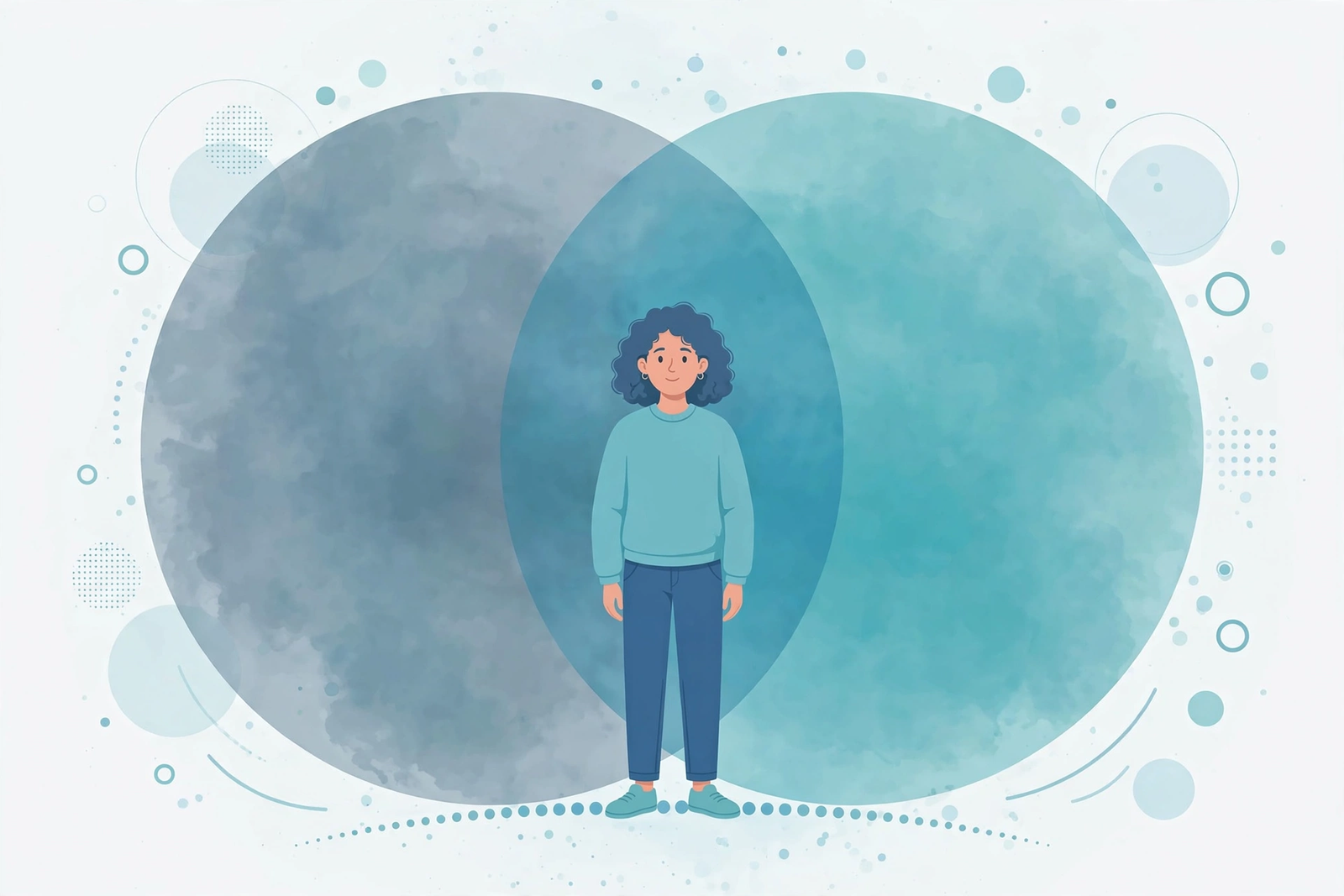
The relationship between anxiety and depression is complex. The persistent worry associated with anxiety can lead to the hopelessness of depression. At the same time, the low energy of depression can make a person feel anxious about their inability to keep up with life.
In this guide, I will explore the deep connection between these two conditions. We will examine how they interact and provide evidence based strategies for managing them together based on my decade of experience in life management and holistic healing.
1. Overlapping Symptoms of Anxiety and Depression
Distinguishing between anxiety and depression can be difficult because they share a significant amount of symptom real estate. When they occur together, it is known as comorbidity.
1.1 Physical Symptoms
The body often reacts to mental distress in the same way, regardless of the diagnosis.
- Sleep Disturbances: Anxiety often makes it hard to fall asleep due to racing thoughts. Depression might cause you to wake up too early or sleep excessively. Both result in poor rest and decreased cognitive function.
- Chronic Fatigue: Feeling constantly drained is a hallmark of both. The mental energy required to manage high alert anxiety or low mood depression is physically exhausting.
- Muscle Tension and Pain: Both conditions can manifest as headaches, stomach issues, or back pain. These are physical signals of a nervous system that is out of balance.
1.2 Emotional Symptoms
While the nature of the emotion differs, the weight of the distress is remarkably similar.
- Negative Thought Patterns: This includes self-criticism and pessimism about the future. An anxious person fears the future, while a depressed person may feel there is no future worth having.
- Irritability: When your internal resources are low, your fuse becomes short. Small stressors that would normally be easy to handle can cause an emotional outburst or a sense of being completely overwhelmed.
1.3 Behavioral Symptoms
Changes in how you interact with the world are often the first signs others notice.
- Social Withdrawal: You might avoid friends because you are too anxious about the interaction or too depressed to find the energy to engage.
- Avoidance: This is a major link between anxiety and depression. Avoiding responsibilities to reduce anxiety often leads to the guilt and stagnation that fuel depression.
2. How Anxiety and Depression Interact
The link between anxiety and depression is bidirectional. This means they feed into each other in a continuous loop. If one is left untreated, it almost always invites the other.
2.1 Anxiety Leading to Depression
Chronic anxiety is a state of high physiological arousal. Your body is constantly in fight or flight mode. Over time, this is not sustainable. The brain eventually reaches a state of emotional exhaustion. When the high of anxiety breaks, it often crashes into the low of depression. The individual feels defeated by their own worry, leading to a sense of hopelessness.
2.2 Depression Leading to Anxiety
Depression can be deeply isolating. As a person withdraws from their life, they lose confidence in their ability to function. This creates a new source of anxiety. A person may become anxious about their depression itself, worrying about when they will feel normal again or if they will lose their job and relationships.
2.3 Shared Biological and Environmental Factors
The link is also found in our biology. Both conditions involve the same neurotransmitters such as serotonin, dopamine, and norepinephrine. Genetic research in 2026 suggests that some people are born with a nervous system that is naturally more sensitive. Environmental triggers like childhood trauma or chronic workplace stress can activate these genetic switches, leading to both anxiety and depression simultaneously.
3. Effective Treatment Strategies from a Holistic Perspective
The good news is that because these conditions are so closely linked, they often respond to the same treatments. Integrated care is the gold standard for dual diagnosis.
3.1 Integrated Therapy and NLP
- Cognitive Behavioral Therapy (CBT): This helps you catch the cognitive distortions that fuel both fear and sadness.
- Neuro-Linguistic Programming (NLP): In my practice, I use NLP to help clients reframe their internal dialogue and break the subconscious patterns that keep them stuck in a cycle of worry and low mood.
- Mindfulness and Hypnotherapy: These tools help you stay in the present and access the subconscious mind to promote deep relaxation and emotional release.
3.2 Medication and Biology
Psychiatrists often use medications that hit multiple targets at once.
- SSRIs and SNRIs: These are often the first line of defense to help balance the neurotransmitters affecting both mood and anxiety.
- Personalized Prescribing: Genetic testing is increasingly used to see which medication will work best for your specific body chemistry, reducing the trial and error phase.
3.3 The Power of Lifestyle and Energy Healing
You cannot heal a mind that is living in a neglected body. Small habits are the foundation of recovery.
- Exercise: Even a ten minute walk can release enough endorphins to temporarily break a depressive fog and lower anxiety levels.
- Energy Healing: Techniques like Reiki or Pranic healing can help clear the energetic blockages often associated with chronic emotional distress, restoring a sense of flow and balance.
- Circadian Health: Fixing your sleep schedule is one of the fastest ways to improve emotional resilience.
4. Red Flags and When to Seek Help
Because these conditions can mask each other, it is important to look for signs that you need professional intervention.
- Loss of Function: If you can no longer work, attend school, or care for your hygiene, lifestyle changes alone are not enough.
- Substance Use: Using alcohol or drugs to numb the anxiety or lift the depression is a major red flag that leads to further complications.
- Persistent Physical Ailments: Unexplained pain that does not respond to medical treatment is often a sign of deep seated mental distress.
- Thoughts of Self Harm: This requires immediate attention. In the US, call or text 988. In Pakistan, reach out to the Umang or Aman Foundation helplines.
Frequently Asked Questions
1. Is it possible to have anxiety without depression? Yes, but they are frequently found together. If you have chronic anxiety, it is very important to monitor your mood to ensure it does not descend into depression.
2. Does the same medication work for both? Often, yes. Many antidepressants are also approved for the treatment of generalized anxiety disorder (GAD) because they target the same brain chemicals.
3. Can I recover from both at the same time? Absolutely. Many people find that as they learn to manage their anxiety, their depression lifts because they feel more in control of their lives and their future.
Key Takeaways
The link between anxiety and depression is a two way street. Understanding this connection allows you to stop blaming yourself for failing to get better. Your brain is simply dealing with a complex biological and emotional interaction.
By treating the whole person through a combination of therapy, NLP, and consistent lifestyle habits, you can break the cycle. Recovery is not about being perfectly happy all the time. It is about building the resilience to handle the storms of anxiety and the fogs of depression with grace and strength.
I’m Dr. Ghazala Tahir, founder of Mind Healing Ghazala. With over a decade of experience in life management coaching, neuro-linguistic programming (NLP), hypnotherapy, and energy healing, I am dedicated to helping you find your path to peace.
Struggling with the weight of anxiety or depression? Reach out confidentially at MindHealingGhazala.com for personalized guidance that blends professional expertise with deep cultural understanding. Your safety and peace start today. You are just one trusted conversation away. 🤍
