



Key Points
- Not all high energy or distraction means ADHD
- Frequency, intensity, and impact matter more than behavior itself
- ADHD patterns are consistent across settings
- Emotional regulation is a key difference
- Understanding the difference prevents unnecessary fear
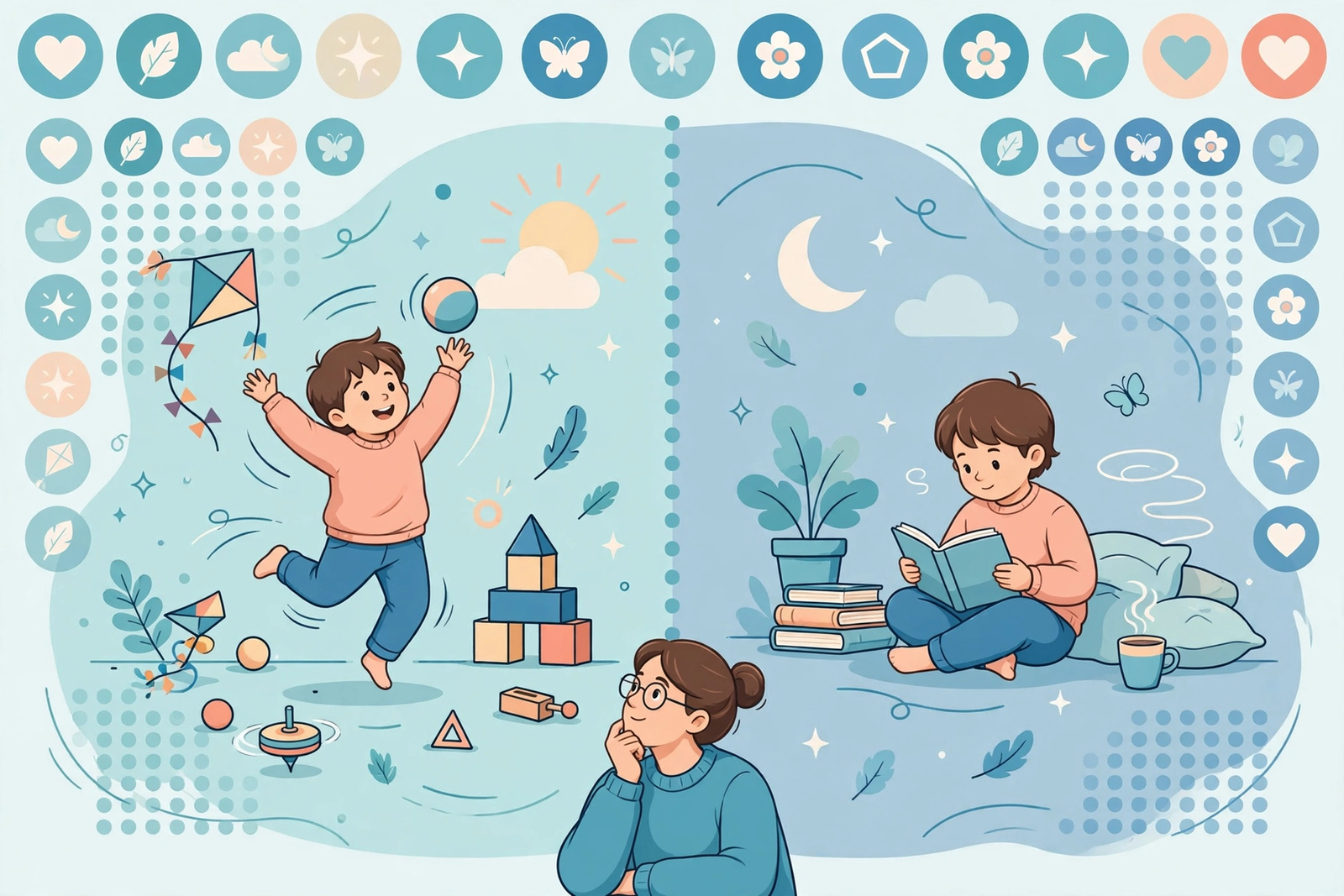
Every child gets distracted. Every child has bursts of energy. Every child has moments of emotional intensity — this is part of growing up. What makes many parents anxious is not a single behavior, but the pattern that seems to repeat day after day. If you’re wondering about ADHD or normal behavior, this parent’s guide is written to give you calm, honest clarity.
You may find yourself asking whether your child is simply being a child or whether something deeper is going on. This question is common, and it deserves a calm and honest answer rather than fear-driven assumptions.
Normal Childhood Behavior Explained
Children are naturally curious, energetic, and emotional. Young brains are still learning how to regulate attention, impulses, and feelings. It is normal for children to forget instructions, struggle with patience, and become distracted, especially when they are tired, hungry, or excited.
Normal behavior tends to come and go. A child may struggle one week and do well the next. They may focus deeply on some tasks and lose interest in others. Importantly, normal behavior usually improves with gentle guidance, maturity, and routine.
What Makes ADHD in Children Different
ADHD in children is not defined by occasional behavior. It is defined by consistent patterns that interfere with daily life. These patterns appear across settings, such as home, school, and social situations, and they persist over time.
Children with ADHD often struggle even when they want to do well. Effort does not always translate into success. This gap between intention and outcome is one of the most painful aspects of ADHD for both children and parents.
Consistency Across Settings
One of the clearest differences between ADHD and normal behavior is consistency. A child with ADHD may struggle to focus at school, at home, and during activities they do not choose themselves. The difficulty does not disappear simply because expectations change.
With typical behavior, children may struggle in one environment but do well in another. With ADHD, challenges tend to follow the child across situations.
Emotional Regulation as a Clue
Emotional responses offer important insight. Children with ADHD often experience emotions more intensely and have difficulty calming themselves once upset. Small frustrations can lead to big reactions, and recovery may take longer.
In typical development, emotional regulation improves steadily with age. In ADHD, emotional intensity may remain strong and feel out of proportion to the situation.
Effort Versus Outcome
Many parents notice that their child tries hard but still struggles. Homework takes hours. Instructions are forgotten moments after being given. This is not because the child is careless. It is because the brain struggles to hold and organize information.
In normal behavior, effort usually leads to improvement. In ADHD, effort alone is often not enough without support.
Attention Patterns in ADHD in Children
ADHD does not mean a child cannot focus at all. Many children with ADHD focus intensely on activities they enjoy. The difficulty lies in regulating attention, not lacking it.
If a child can focus for long periods on preferred activities but struggles significantly with everyday tasks, this pattern may point toward ADHD rather than typical distraction.
Impact on Daily Life
Another key difference is impact. ADHD begins to affect learning, friendships, self esteem, and family dynamics. Children may begin to feel frustrated with themselves. Parents may feel exhausted and confused.
When behavior starts to affect a child’s emotional well being, it is a sign that support is needed, regardless of the label.
When Behavior Is Likely Not ADHD
Short term changes caused by stress, transitions, lack of sleep, or emotional challenges can look similar to ADHD. In these cases, behavior often improves once the underlying issue is addressed.
This is why observation over time is so important. Quick conclusions rarely help.
When to Consider an ADHD Evaluation
If challenges are persistent, present in multiple settings, and interfering with daily functioning, an evaluation can provide clarity. An evaluation is not a commitment to treatment. It is a tool for understanding.
Many families feel relief after evaluation because confusion is replaced with explanation.
Supporting Your Child While You Observe
You do not need to wait for certainty to be supportive. Providing structure, emotional validation, and predictable routines helps all children, regardless of diagnosis.
Stage 1: Observe With Curiosity
Instead of asking what is wrong, ask what your child might need. This shift changes how children experience support.
Practical Tools That Help During Uncertainty
- Keep routines predictable
Consistency supports regulation for all children. - Reduce instructions
Fewer steps prevent overwhelm. - Focus on connection
Emotional safety improves behavior. - Notice patterns
Observation over time reveals clarity.
Talking to Your Child About Differences
Avoid framing behavior as a problem. Focus on strengths and growth. Children do not need answers before they need reassurance.
Your calm presence helps more than certainty.
Red Flags to Watch For
Seek additional support if your child shows ongoing frustration, emotional shutdown, negative self talk, or avoidance of school and activities. These signs indicate stress that needs attention.
Frequently Asked Questions
Can normal behavior look like ADHD at times?
Yes. Short term behaviors can overlap, which is why time and context matter.
Does ADHD always show early?
Often yes, but some signs become clearer as demands increase.
Should I wait before seeking help?
You can observe while still offering support and structure.
Can anxiety mimic ADHD?
Yes. Anxiety can affect focus and behavior, which is why evaluation looks at the full picture.
Key Takeaways
Wondering whether your child’s behavior is normal or something more does not mean you are overreacting — it means you are paying attention. ADHD in children is not defined by a single behavior, but by patterns that affect daily life. When parents approach this question with curiosity instead of fear, children feel safer and more supported. A gentle note: this article is for educational purposes only and isn’t medical advice — if you’re concerned about your child’s behavior, please consult a pediatrician or child psychologist for a professional evaluation. Contact me today for personalized ADHD guidance and family support.
