



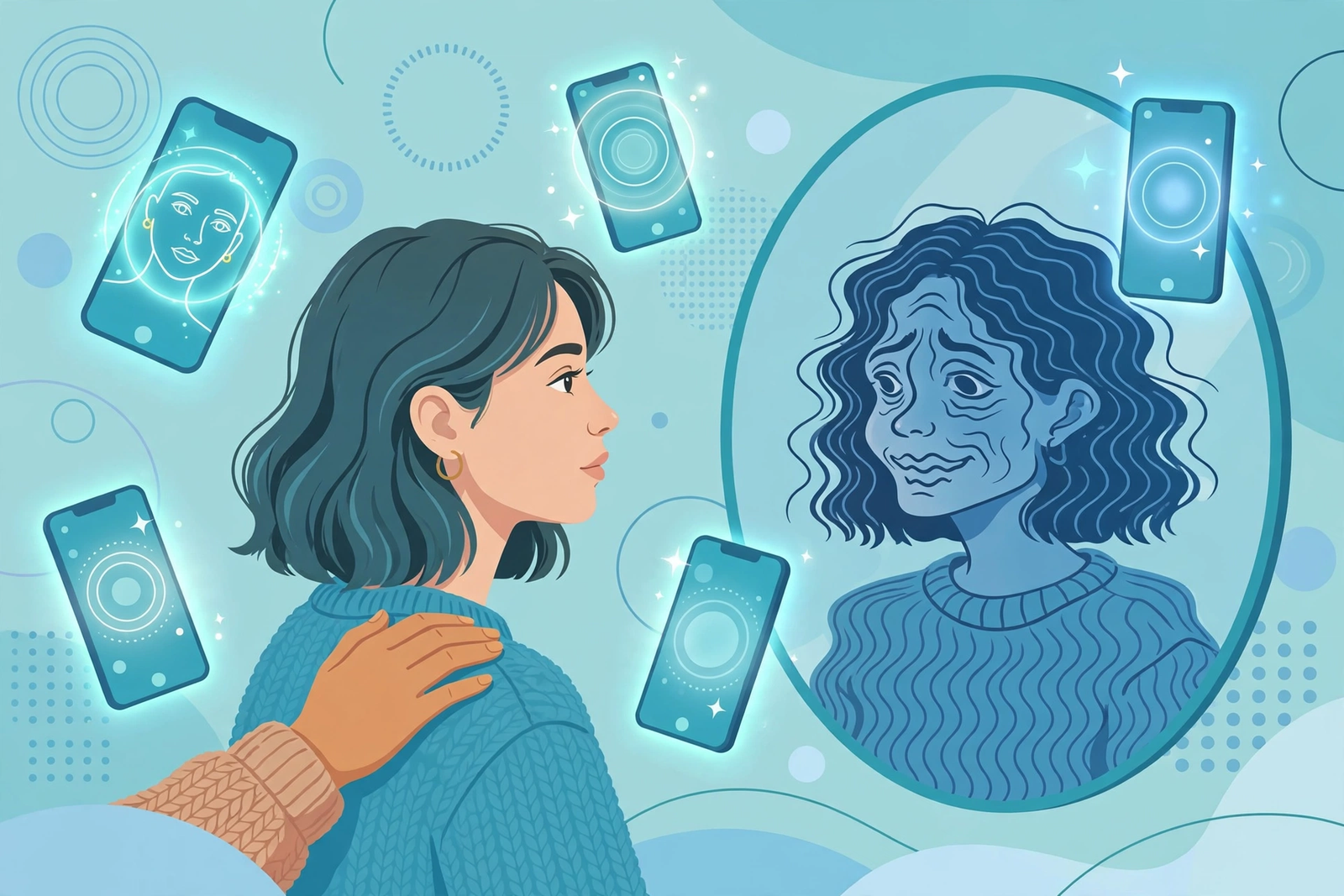
Scrolling through perfectly filtered photos can leave you feeling like you’ll never measure up, and that ache is more common than you think. Body dysmorphic disorder and online beauty culture are deeply intertwined in today’s digital world, but learning how they connect can help you protect your self-image and find healthier ways to engage online.
Key Points:
- Online beauty culture, including social media platforms, contributes to unrealistic beauty standards and increases the risk of developing Body Dysmorphic Disorder (BDD).
- Constant exposure to filtered and edited images online can distort self-perception and contribute to body dissatisfaction.
- The pursuit of an idealized appearance, driven by social media trends and influencers, can exacerbate preoccupation with perceived flaws in one’s body.
- Digital detox, mindful social media consumption, and therapy can help individuals manage the negative effects of online beauty culture on body image and mental health.
Body Dysmorphic Disorder and Online Beauty Culture
The digital age has brought both opportunities and challenges to how we view ourselves and others. Social media platforms, online beauty influencers, and the digital beauty industry often promote an idealized version of beauty, characterized by flawless skin, sculpted bodies, and filtered faces. For individuals with Body Dysmorphic Disorder (BDD), these digital beauty standards can have a harmful effect on self-perception, leading to an obsessive preoccupation with their own appearance.
In this article, we will explore how online beauty culture influences Body Dysmorphic Disorder, exacerbates body dissatisfaction, and impacts individuals’ mental health. We will also discuss strategies for managing the negative impact of online beauty culture and maintaining a healthy relationship with self-image in the digital age.
How Online Beauty Culture Fuels Body Dysmorphic Disorder
Social media and digital platforms have revolutionized how we communicate, share information, and present ourselves. However, they also have a profound impact on body image. Online beauty culture—composed of influencers, beauty standards, and heavily edited images—can contribute to the development or worsening of Body Dysmorphic Disorder.
1. Exposure to Unrealistic Beauty Standards:
- Filtered and edited images: The use of filters and editing apps has become a common practice for individuals and influencers online, with many images displaying unattainable standards of beauty. These edited images can distort reality and set unrealistic expectations for appearance. For individuals with BDD, seeing “perfect” faces and bodies online can reinforce the belief that they too must achieve these standards, fueling feelings of inadequacy and dissatisfaction with their own appearance.
- Influencers and celebrities: Many social media influencers and celebrities present an idealized image of beauty that is heavily curated and edited. The constant exposure to these images can lead to a negative comparison, where individuals with BDD feel that their own physical appearance does not measure up, further exacerbating obsessive thoughts about their bodies.
- Perfection as the norm: The idea of perfection being the standard has become prevalent in online spaces. Social media platforms like Instagram and TikTok often promote flawless images of beauty, which can lead individuals with BDD to believe that physical perfection is not only attainable but necessary for social acceptance and validation.
2. Social Comparison and Self-Esteem:
- Comparison culture: Social media thrives on comparison, with individuals frequently comparing their appearance to the curated images of others. For individuals with BDD, this constant comparison can exacerbate negative self-image and reinforce the belief that their flaws define their worth.
- Seeking validation: The desire for likes, comments, and followers on social media can lead individuals to seek external validation for their appearance. For those with BDD, this can create a cycle of dependence on others’ approval, which only reinforces feelings of insecurity and inadequacy when validation is not received.
- Fear of judgment: The pressure to conform to beauty standards can create a fear of judgment. Individuals with BDD may avoid posting pictures, attending social events, or participating in online discussions because they fear being judged for their appearance, which can contribute to social withdrawal and isolation.
The Impact of Body Dysmorphic Disorder in the Digital Age
The influence of online beauty culture is not just limited to body dissatisfaction; it can have a significant impact on mental health, emotional well-being, and behavior. For individuals with Body Dysmorphic Disorder, this impact can be severe, leading to distress, compulsive behaviors, and a diminished quality of life.
1. Increased Preoccupation with Appearance:
The exposure to constant, edited images of beauty online can lead individuals with BDD to become fixated on their appearance. This preoccupation can take up a significant amount of their time and energy, leading to reduced engagement in other aspects of life, such as work, school, or social activities.
- Mirror checking and body comparison: Individuals with BDD may become obsessed with their appearance, constantly checking mirrors or reflective surfaces, comparing themselves to influencers or celebrities online. This can lead to compulsive behaviors, which may provide temporary relief but ultimately worsen the preoccupation with appearance.
- Excessive grooming or cosmetic procedures: In an attempt to match the idealized beauty standards seen online, individuals with BDD may engage in excessive grooming, dieting, or even cosmetic procedures. This can lead to dissatisfaction with the results, perpetuating the cycle of body dissatisfaction.
2. Social Isolation and Avoidance:
Individuals with Body Dysmorphic Disorder may avoid social situations or withdraw from online platforms because they fear being judged for their appearance. The fear of not meeting beauty standards can cause them to retreat from social interactions, isolating themselves from friends, family, and potential support systems.
- Social media avoidance: Some individuals may choose to avoid social media altogether, fearing the comparison and validation that comes with it. This avoidance can further contribute to feelings of loneliness and isolation.
- Fear of exposure: The desire to keep their perceived flaws hidden may cause individuals to avoid situations where they feel their appearance might be scrutinized, such as parties, gatherings, or even video calls.
3. Mental Health Struggles:
The constant exposure to idealized beauty standards online can exacerbate existing mental health conditions, such as anxiety, depression, and obsessive-compulsive behaviors. For individuals with BDD, these struggles can become more pronounced in the digital age.
- Increased anxiety and depression: The pressure to conform to unrealistic beauty standards can heighten anxiety and contribute to feelings of depression, particularly when individuals feel they are unable to measure up.
- Obsessive thoughts and compulsive behaviors: BDD can lead to obsessive thoughts about appearance, often accompanied by compulsive behaviors like excessive grooming, skin picking, or seeking reassurance. These behaviors can be triggered or worsened by exposure to beauty content on social media.
Strategies for Managing the Impact of Online Beauty Culture on BDD
While social media and online beauty culture can have a negative impact on individuals with BDD, there are strategies that can help mitigate its effects and promote a healthier relationship with self-image. Here are some strategies to consider:
1. Limit Social Media Exposure:
- Set boundaries: Limit the time spent on social media platforms, particularly those that promote unrealistic beauty standards. Taking breaks or scheduling “digital detoxes” can help reduce exposure to triggering content.
- Unfollow harmful accounts: Follow accounts that promote body positivity, diversity, and self-acceptance. Curate your feed to include content that encourages healthy body image and self-love, rather than promoting perfection.
- Avoid comparison: Remind yourself that images seen on social media are often heavily edited or filtered and may not represent reality. Focus on the positives in your life, such as personal achievements or talents, rather than comparing yourself to others.
2. Practice Mindful Social Media Consumption:
- Engage with positive content: Follow accounts that embrace body diversity, inclusivity, and self-compassion. Engage with content that emphasizes inner beauty and well-being, rather than focusing solely on outward appearance.
- Limit exposure to beauty filters: Try to reduce the use of filters and photo editing apps, and instead embrace your natural self. By challenging the pressure to conform to digitally altered images, you can begin to appreciate your authentic appearance.
3. Therapy and Self-Compassion:
- Cognitive Behavioral Therapy (CBT): CBT is an effective treatment for Body Dysmorphic Disorder, helping individuals challenge distorted beliefs about their appearance. Therapy can also teach coping strategies for managing anxiety and obsessive thoughts.
- Mindfulness and self-compassion: Practicing mindfulness and developing self-compassion can help you break free from the negative cycle of comparison and self-criticism. Mindfulness techniques, such as focusing on the present moment and practicing self-kindness, can reduce the impact of social media on your mental health.
Frequently Asked Questions
How does social media influence Body Dysmorphic Disorder?
Social media promotes unrealistic beauty standards and constant comparison to idealized images, which can exacerbate body dissatisfaction and contribute to the development or worsening of Body Dysmorphic Disorder. Filters and editing apps further distort reality, leading to an unhealthy focus on appearance.
Can I still use social media if I have BDD?
Yes, but it’s important to set boundaries and curate a positive, body-accepting online environment. Limit exposure to content that reinforces unrealistic beauty standards and follow accounts that promote diversity, self-love, and body positivity.
What are some coping strategies for managing the impact of social media on body image?
Limit social media use, unfollow harmful accounts, engage with positive and inclusive content, and practice self-compassion. Therapy, particularly Cognitive Behavioral Therapy (CBT), can also help address the underlying thoughts and behaviors associated with BDD.
Key Takeaways
Online beauty culture and social media can contribute to Body Dysmorphic Disorder by promoting unrealistic beauty standards and fostering constant comparison. Limiting social media exposure, engaging with positive content, and practicing self-compassion are key strategies for managing the impact of online beauty culture on body image. Therapy, particularly CBT, can provide essential support for those struggling with BDD in the digital age.
