



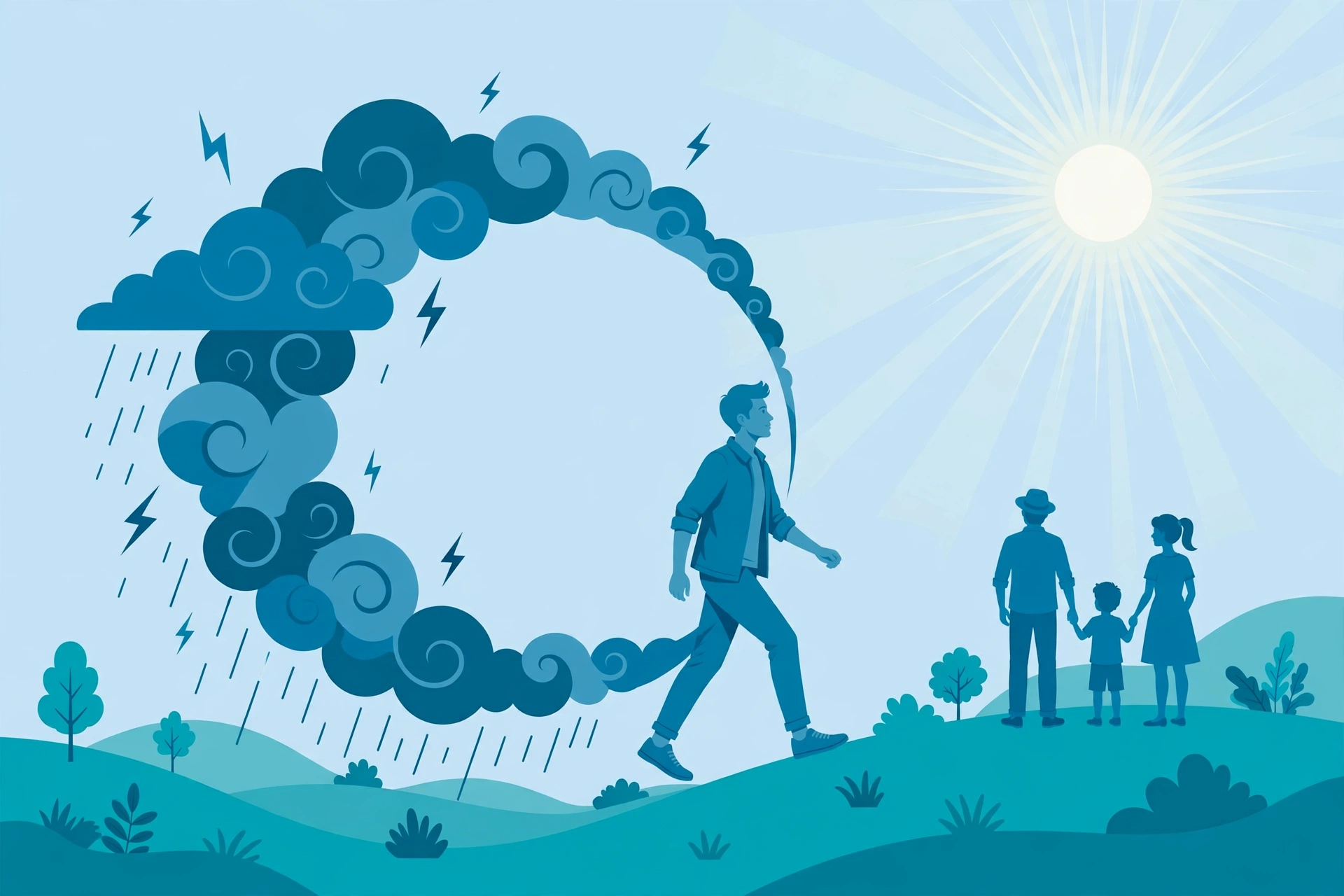
The migraine ends, but the worry does not: when will the next strike — during an exam, a wedding, a meeting? If migraines have made you an anxious person, the migraines may be the reason. Here is how it happens, and how to break free.
Key Points
- Yes — migraines can cause anxiety, through severe pain, unpredictability, and the constant dread of the next attack.
- Anxiety can even be part of the migraine itself, appearing in the prodrome before pain begins or during the pain phase.
- The result is a self-feeding cycle: migraines create anxiety, and anxiety lowers the migraine threshold, inviting more attacks.
- Anxiety disorders are many times more common among people with migraine — generalised anxiety disorder is about five times more prevalent in this group.
- Breaking the cycle means treating the migraines properly and addressing the anxiety directly, not one or the other.
The Short Answer: What Research Shows
Unlike the reverse direction, migraines genuinely can generate anxiety where none existed. People with migraine — particularly frequent or chronic migraine — develop anxiety disorders at rates far above the general population.
Generalised anxiety disorder is roughly five times more prevalent among people with migraine, who are also several times more likely to develop panic disorder. Researchers have documented “migraine-related anxiety” — persistent worry and hypervigilance focused on when the next attack will arrive — which sits between ordinary worry and a diagnosable disorder but can be just as impairing as the migraines themselves.
The mechanism is no mystery: migraines are severe, disabling, and unpredictable. Few could live with that for years unchanged.
Four Ways Migraines Create Anxiety
Anticipatory anxiety and hypervigilance
The most direct route is dread. After enough attacks, many begin constantly scanning for warning signs — a twinge behind the eye, a flicker of vision, a wave of tiredness — misreading ordinary sensations as a migraine starting. This hypervigilance keeps the nervous system in low-grade alarm between attacks, raising stress hormones and lowering the migraine threshold — so fear of the next attack helps bring it on.
The disruption spiral
Migraines steal days: cancelled plans, missed work, ruined holidays, exams sat through pain. Over time the losses build a background sense of helplessness — fertile ground for anxiety. In our context it hits hard: board exams and entry tests that cannot be rescheduled, family weddings where absence is noticed, jobs where sick leave is frowned upon. When an attack can cost something irreplaceable, worrying about the next one is not irrational — it is a reasonable response to a genuinely disruptive condition.
Anxiety as part of the migraine itself
Many are never told this: anxiety can be a symptom of the migraine, not just a reaction to it. Prodrome brain changes — hours before pain — can produce nervousness and unease before you know a migraine is coming. During the pain phase, adrenaline release can generate severe anxiety as part of the attack. If you have felt anxious “for no reason” and then developed a migraine hours later, the anxiety may have been the migraine announcing itself.
The postdrome vulnerability window
The day after — the “migraine hangover” — brings fatigue, fog, and fragility, plus peak dread of the next attack: pain fresh in memory, body depleted. Recognising this window helps you treat it gently, not as weakness.
Medication side effects
One more contributor: some migraine medications contain caffeine, which can provoke anxiety. If anxiety spikes after acute treatment, mention it to your doctor — alternatives exist.
The Cycle, Step by Step
Once established, the migraine–anxiety loop runs like this:
- A migraine attack causes severe pain, disruption, and fear.
- Between attacks, anticipatory anxiety keeps stress hormones elevated and sleep disturbed.
- Heightened arousal, poor sleep, and constant body-scanning lower the migraine threshold.
- The next attack arrives sooner — confirming that the fear was justified.
- Avoidance creeps in: cancelled plans, skipped exercise, restricted life — which sustains anxiety without preventing attacks.
- The cycle tightens with each rotation.
Every link in this loop is also an intervention point.
Is It Migraine-Related Anxiety or an Anxiety Disorder?
The distinction is practical. If worry focuses specifically on migraines — when the next will come, whether you will cope — and eases during long migraine-free stretches, it is likely migraine-related anxiety. If worry is constant and spreads across health, family, work, and the future regardless of migraine activity, a generalised anxiety disorder may have developed alongside.
Both are treatable and frequently coexist. You do not need a perfect diagnosis before seeking help. The key question is impact: if anxiety is shrinking your life, it deserves treatment in its own right.
Breaking the Cycle: Treat the Migraines Well
This leverage point is underestimated: every migraine prevented is one less event feeding anxiety — and fewer attacks mean less dread, because the threat genuinely shrinks.
Start with an accurate diagnosis from a neurologist or knowledgeable GP, and use acute treatment early rather than “waiting to see.” If attacks are frequent — four or more a month, or increasing — discuss preventive options. Guard against medication-overuse headache by keeping acute medicine use within limits, and manage controllable triggers: consistent sleep, regular meals, steady caffeine, hydration, and a trigger diary.
Build a written migraine action plan: decide in advance what you will take, where you will go, who you will call. Anticipatory anxiety thrives on uncertainty; a plan replaces “what if” with “I know exactly what to do.”
Breaking the Cycle: Treat the Anxiety Directly
Better migraine control alone rarely dissolves established anxiety — worry patterns persist as attacks grow rarer. Address them head-on.
Cognitive behavioural therapy is best-evidenced: it targets the catastrophising and hypervigilance maintaining the cycle and rebuilds self-efficacy — the confidence you can handle an attack if one comes. Research shows this confidence predicts better headache outcomes independently of attack frequency. Relaxation training, biofeedback, and mindfulness calm the baseline arousal keeping the threshold low.
Then deliberately reverse avoidance. Cancelled plans feel protective but sustain anxiety long-term while doing little to prevent attacks. Re-engage gradually with backup plans: attend with medication and an exit strategy, exercise gently and build up, keep commitments with honest communication. Each completed plan weakens fear more than any avoided one.
A Note for Readers in Pakistan and South Asia
In our setting, migraine-related anxiety often goes unnamed twice: the migraine dismissed as “just a headache,” the anxiety as overthinking or lack of faith. Women — carrying a higher migraine burden plus heavy household expectations — frequently suffer silently rather than “burden” the family. If professional care feels out of reach, begin with your GP. Public hospital outpatient departments offer low-cost neurology and psychiatry consultations, though waits can be long; telehealth has widened access. When relatives understand these are medical realities with effective treatments, home becomes part of recovery instead of another pressure.
Frequently Asked Questions
Can migraines cause anxiety even if I never had anxiety before?
Yes. Unlike the reverse relationship, migraines can generate an anxiety disorder where none existed. Severe recurring pain, unpredictability, and life disruption are enough — over months or years — to produce persistent anticipatory anxiety and, in some, a diagnosable disorder.
Why do I feel anxious before a migraine starts?
That pre-migraine unease is often the prodrome itself. Brain changes hours before pain begins can produce nervousness, restlessness, and dread. It is not “all in your head” in the dismissive sense — it is neurological, a genuine early symptom of the attack.
Does worrying about migraines actually cause more migraines?
Unfortunately, yes. Anticipatory anxiety keeps stress hormones elevated and disrupts sleep, lowering the migraine threshold. This does not mean weakness is causing your migraines — it means the anxiety deserves treatment as part of migraine care, not as an afterthought.
Will migraine prevention medication help my anxiety too?
Often, indirectly: fewer attacks mean less fuel for anticipatory anxiety, and worry commonly fades as attacks grow rarer. Some preventives — certain antidepressants and beta-blockers — also act directly on anxiety pathways. Discuss both goals with your doctor so treatment covers the full picture.
How long does migraine-related anxiety last?
It varies. For some it fades within weeks of getting migraines under control; for others, learned worry patterns persist months or years after attacks improve. That persistence is normal and treatable — precisely what therapy addresses — not a sign something is permanently wrong.
Key Takeaways
- Migraines can genuinely cause anxiety — through pain, unpredictability, disruption, and dread of the next attack.
- Anxiety may also appear as a symptom of the migraine itself, in the prodrome or during the pain phase.
- The two conditions form a self-feeding cycle, and each rotation tightens it — but every link is an intervention point.
- Treat the migraines well: accurate diagnosis, early acute treatment, preventives when needed, and a written action plan.
- Treat the anxiety directly: CBT, relaxation skills, and gradual reversal of avoidance rebuild confidence.
- If anxiety is shrinking your life — whatever its label — it deserves professional care, not silent endurance.
