



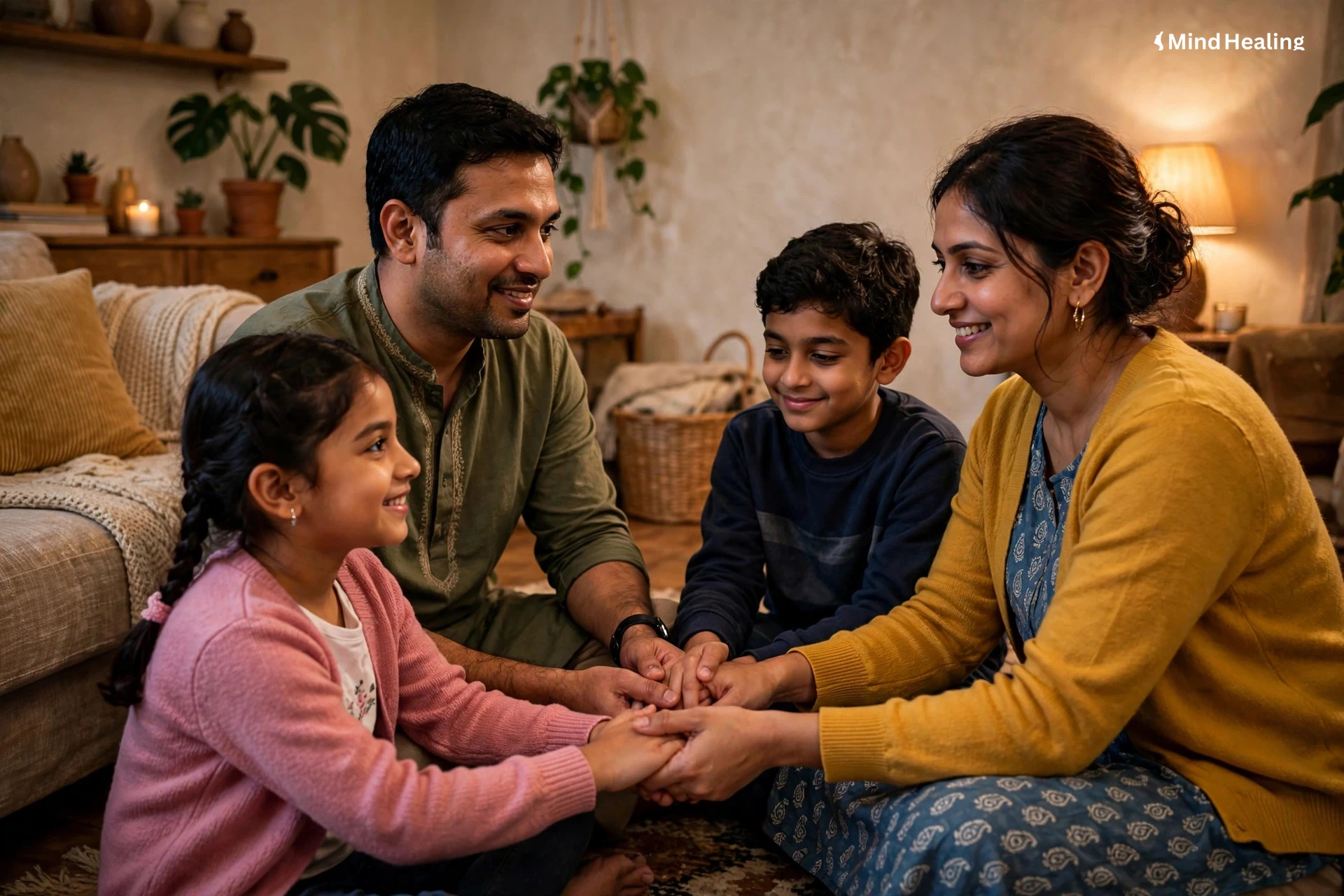
Someone you love is suffering, and you feel helpless. They have nightmares, they snap at you, they have withdrawn from everything you used to share — and nothing you say seems to reach them. If you are the partner, parent, sibling, or friend of a person with PTSD, you are in one of the hardest supporting roles there is: close enough to witness the pain, powerless to take it away, and often on the receiving end of symptoms that feel personal.
This guide is for you. You will learn what PTSD feels like from the inside, what genuinely helps (and what quietly harms), how to respond during flashbacks and crises, how to encourage professional help without pressuring, and — just as important — how to protect your own mental health. Supporting a trauma survivor is a marathon, and you cannot pour from an empty cup.
Key Points
- The most powerful thing you can offer is steady, non-judgmental presence — not solutions, not pep talks, just reliable closeness.
- PTSD symptoms (irritability, withdrawal, numbness) are symptoms, not character — learning this reframe changes everything about how you respond.
- What harms: minimizing (“it wasn’t that bad”), pressuring them to talk, taking symptoms personally, and trying to “fix” them.
- During flashbacks or panic, your job is grounding and safety — not reasoning, not restraining, not flooding them with questions.
- Encourage professional treatment gently and repeatedly; you cannot be someone’s therapist.
- Caregiver burnout is real — your wellbeing is not selfish, it is what makes sustained support possible.
Understanding What They Are Going Through
Before the “how,” the “what.” PTSD is not a bad mood or a rough patch — it is a nervous system stuck in survival mode. If you have not read it, our guide to PTSD symptoms, causes, and diagnosis explains the mechanics. For supporters, three insights matter most:
Their reactions are not choices
When your loved one explodes over a small noise, freezes when touched unexpectedly, or goes numb and distant mid-conversation, they are not choosing to be difficult. Their threat system has fired before conscious thought gets a vote. Blaming them for symptoms is like blaming someone for coughing — it adds shame to suffering and helps nothing.
Avoidance feels protective to them
It is maddening to watch someone refuse the wedding, the drive, the crowded bazaar — the very things that would reconnect them with life. Understand that avoidance brings genuine, immediate relief from terror. They are not lazy or stubborn; they are self-medicating with distance. Your role is not to drag them into feared situations (that backfires) but to support the gradual, professional work of facing them.
Recovery is slow and non-linear
There will be good weeks and terrible ones. A bad day after months of progress does not mean treatment failed or your support was wasted. Expecting steady improvement sets you both up for despair; expecting a winding path lets you celebrate the overall direction.
What Genuinely Helps
Listen without fixing
When they do talk about the trauma or their feelings, your only job is to listen — attentively, without interrupting, advising, or steering toward silver linings. Reflect back what you hear: “That sounds terrifying.” “It makes sense you’d feel that way.” Most supporters rush to reassure (“you’re safe now,” “at least it wasn’t worse”) because their own discomfort demands it. Resist that. Being heard without being fixed is one of the rarest and most healing experiences a trauma survivor can have.
Be reliably present
PTSD teaches survivors that the world — and people — are unsafe and unpredictable. You counter that lesson not with grand gestures but with boring reliability: show up when you say you will, keep routines steady, be the same calm person on their bad days as their good ones. Predictability is therapeutic. Even sitting quietly in the same room, no pressure to talk, communicates “I’m not leaving” more powerfully than any speech.
Learn their triggers — gently
Over time, you will notice what sets off symptoms: certain sounds, places, topics, anniversaries, even tones of voice. You cannot eliminate all triggers (and should not try — the world will not rearrange itself), but you can reduce unnecessary ones and, more importantly, respond skillfully when triggers happen. Ask, during a calm moment: “Is there anything I do that makes things harder? Anything that helps when you’re struggling?” Let them be the expert on their own experience.
Offer practical support
PTSD is exhausting, and daily life does not pause for it. Concrete help — cooking, childcare, driving them to appointments, handling a bill — often matters more than emotional speeches. Practical support also counters the survivor’s shame-laden belief that they are a burden: it says “you’re worth caring for” in the language of action.
Respect their autonomy
Trauma is, at its core, an experience of powerlessness. Support that overrides their choices — however well-meant — repeats that dynamic. Ask before hugging. Ask before sharing their story with others. Let them decide what to attend, what to discuss, and when. Every respected “no” rebuilds the sense of agency that trauma destroyed.
What Harms (Even With Good Intentions)
Minimizing and comparing
“It wasn’t that bad.” “Others had it worse.” “At least you’re alive.” These statements, meant to comfort, tell the survivor their pain is illegitimate. Trauma is not a competition, and the brain does not grade on a curve. Never rank someone’s suffering.
Pressuring them to talk
“You need to get it out” / “Just tell me what happened” — forced disclosure can retraumatize. They will talk when and if they are ready, ideally first with a professional. Your openness to listening is enough; the decision to speak is theirs.
Taking symptoms personally
The irritability, the cancelled plans, the emotional distance — it feels like rejection, and it hurts. But interpreting symptoms as messages about you (“she doesn’t love me anymore,” “he’s doing this on purpose”) leads to hurt, fights, and withdrawal of exactly the support they need. When it stings, remind yourself: this is the disorder talking, not the person.
Playing therapist
You cannot treat their PTSD, and trying will exhaust you and strain the relationship. Do not attempt exposure exercises, do not analyze their trauma, do not monitor their “progress” like a project. Love them; leave the treatment to trained professionals. Our PTSD treatment guide explains what effective professional help looks like.
Walking on eggshells forever
Paradoxically, total accommodation harms too. If the whole household reorganizes around avoiding every trigger, the survivor’s world shrinks further and resentment builds in everyone else. The goal is thoughtful balance: reasonable adjustments plus honest communication, not a life held hostage by the disorder.
During Flashbacks, Panic, and Nightmares
Flashbacks: ground, don’t grab
If your loved one is having a flashback (staring blankly, reliving the trauma, unresponsive or panicking): stay calm — your panic fuels theirs. Speak slowly and simply: use their name, tell them where they are and that they are safe. Do not grab or restrain them unless they are in immediate physical danger; unexpected touch can intensify the flashback or trigger a defensive reaction. Offer grounding: “Can you feel your feet on the floor? Can you name five things you see?” When it passes, do not demand a debrief — offer water, quiet, and closeness on their terms.
Panic attacks: breathe with them
Sit with them, breathe slowly and audibly so they can match your rhythm, and remind them it will pass (panic peaks within minutes). Do not say “calm down” — say “I’m here, you’re safe, this will pass.”
Nightmares: comfort the waking, not the dream
Wake them gently (call their name from a slight distance rather than shaking them), then orient: lights on, “you’re home, it was a dream.” Do not interrogate them about the nightmare’s content at 3 a.m. — comfort first, conversation later if they want it.
Encouraging Professional Help
Many survivors resist treatment — from stigma, fear, hopelessness (“nothing can help”), or the avoidance that is itself a symptom. How you raise it matters enormously:
- Normalize it: “PTSD is a medical condition with effective treatments — like getting a cast for a broken bone.” Frame therapy as strength, not brokenness.
- Make it concrete: vague “you should get help” is easy to deflect. Offer specifics: “I found a trauma therapist at [clinic]; I can drive you to a first appointment.”
- Time it right: raise it during calm moments, never mid-crisis or mid-argument.
- Repeat gently: one conversation rarely suffices. Plant seeds without nagging: mention it, drop it, mention it again weeks later.
- Offer to participate: many therapists offer family sessions; your willingness to be involved can tip the balance.
- Accept their timeline: you can lead a horse to water. Ultimatums sometimes work in crises (safety issues, addiction), but for therapy engagement, sustained gentle encouragement outperforms pressure.
Explore what treatment involves through our therapies overview — understanding it yourself makes you a more convincing advocate.
Boundaries: Loving Them Without Losing Yourself
Boundaries are not betrayal
You can love someone deeply and still say: “I can’t listen to trauma details at midnight; let’s talk tomorrow.” “I need one evening a week for myself.” “I won’t accept being shouted at — I’ll leave the room and come back when we’re both calm.” Boundaries protect the relationship from the corrosion of resentment. A supporter who never rests eventually becomes a resentful supporter — and then no one is helped.
Watch for caregiver burnout
Supporters of trauma survivors have elevated rates of exhaustion, anxiety, depression, and even secondary traumatic stress — absorbing trauma symptoms through constant exposure to another’s suffering. Warning signs mirror parental burnout: dread, irritability, numbness, fantasies of leaving, declining health. If you recognize these, they signal need — not failure. Consider your own counseling; many therapists work with family members of trauma survivors specifically.
Keep your own life
Maintain friendships, work, hobbies, and rest — not as luxuries but as the infrastructure that keeps you capable of caring. A supporter with a full life brings steadiness; a supporter who has sacrificed everything brings martyrdom, which helps no one and breeds guilt in the survivor.
Supporting a Partner, Child, or Parent: Specific Notes
If your partner has PTSD
Intimacy often suffers — emotional numbness and hypervigilance are anti-aphrodisiacs. Do not interpret distance as lost love; do communicate needs honestly rather than silently resenting. Couples counseling with a trauma-informed therapist can help you navigate this together. Protect the friendship inside the partnership: shared humor, small rituals, and non-sexual affection keep connection alive through hard periods.
If your child has PTSD
Children need safety made tangible: predictable routines, calm reactions to their big reactions, and permission to feel. Do not force them to “be brave” or recount what happened repeatedly. Involve a child trauma specialist early — children respond very well to treatment. And manage your own guilt or rage about what happened to them with your own support, not in front of them. Our parenting resources offer broader guidance on steady, connected parenting through hard times.
If your parent has PTSD
Adult children often become parentified — managing the household’s emotions, mediating, keeping the peace. Recognize this pattern and gently step out of it: you can be caring without being their regulator. Encourage their treatment as an adult speaking to an adult, and get your own support for the years you spent coping.
Support in the Pakistani Family Context
The joint family: resource and risk
In Pakistan, a trauma survivor is rarely supported by one person — the whole household is involved. This is a profound resource: shared caregiving, constant company, collective resilience. But it is also a risk: well-meaning relatives may minimize (“bhool jao, move on”), spiritualize (“namaz parho, sab theek ho jayega” — prayer framed as a substitute for treatment), or gossip about the survivor’s condition. If you are the primary supporter, part of your role may be gatekeeping: kindly but firmly limiting who gets details, correcting harmful comments, and shielding the survivor from family pressure to “just get over it.”
Gendered expectations
Male survivors may face “mard ban” (be a man) pressure that makes vulnerability — the core of both suffering and healing — feel like failure. Female survivors may find their trauma disbelieved or their treatment-seeking framed as disobedience. As a supporter, explicitly counter these scripts: “Seeking help is strength” needs saying out loud, repeatedly, especially to men and especially in front of elders whose approval matters.
Practical help with access
Offer what removes barriers: money for sessions, transport to the clinic, cover stories for conservative households (“it’s a general health checkup”), childcare during appointments. In our context, logistics are love — many survivors, especially women, cannot access help without a family member actively enabling it.
Frequently Asked Questions
How do I talk to someone who refuses to acknowledge their PTSD?
Don’t lead with labels — lead with observations and care: “I’ve noticed you’re not sleeping and you seem on edge constantly. I’m worried about you.” Labels like “PTSD” can wait; the conversation about suffering cannot. Offer information gently (an article, a helpline number) and revisit later.
Is it okay to ask about the traumatic event?
Follow their lead. A gentle, open “Do you want to talk about what happened?” asked once, in a calm moment, is fine — and accept “not now” gracefully. Repeated probing is not. If they do share, listen without pressing for details they don’t volunteer.
What if they get angry at me?
Distinguish symptom from abuse: irritability and snapping are symptoms; sustained verbal abuse, threats, or violence are not acceptable regardless of diagnosis. Name it calmly: “I know you’re struggling, and I won’t accept being spoken to this way.” PTSD explains behavior; it does not excuse cruelty. If you feel unsafe, prioritize your safety and seek guidance.
Should I attend their therapy sessions?
Sometimes — many trauma therapists invite family members for specific sessions (psychoeducation, safety planning, communication). But the core trauma work is theirs alone. Ask the therapist rather than assuming, and never insist on being present for sessions they want private.
How long will they need my support?
Think in terms of months to years, not weeks — but also know that your role should evolve from crisis support to steady companionship as they recover. The goal is their growing independence, not permanent caretaking. Celebrate the shifts: the first laugh, the returned hobby, the handled trigger.
What if I’m struggling too?
Get your own help — a counselor, a support group, a trusted friend who is not in the crisis with you. Secondary traumatic stress is real and treatable. You matter in this story too, not just as a supporting character but as a person.
Key Takeaways
- Your steady, non-judgmental presence is the foundation — more powerful than any advice.
- Learn the reframe: symptoms are the disorder, not the person. It changes every interaction.
- Help by listening, being reliable, offering practical support, and respecting autonomy; harm by minimizing, pressuring, personalizing, or playing therapist.
- During flashbacks: stay calm, ground, don’t grab. During panic: breathe with them. After nightmares: orient and comfort.
- Encourage professional treatment gently, concretely, and repeatedly — and explore therapy options together.
- Protect yourself with boundaries, rest, and your own support. A sustained supporter is a supported supporter.
