



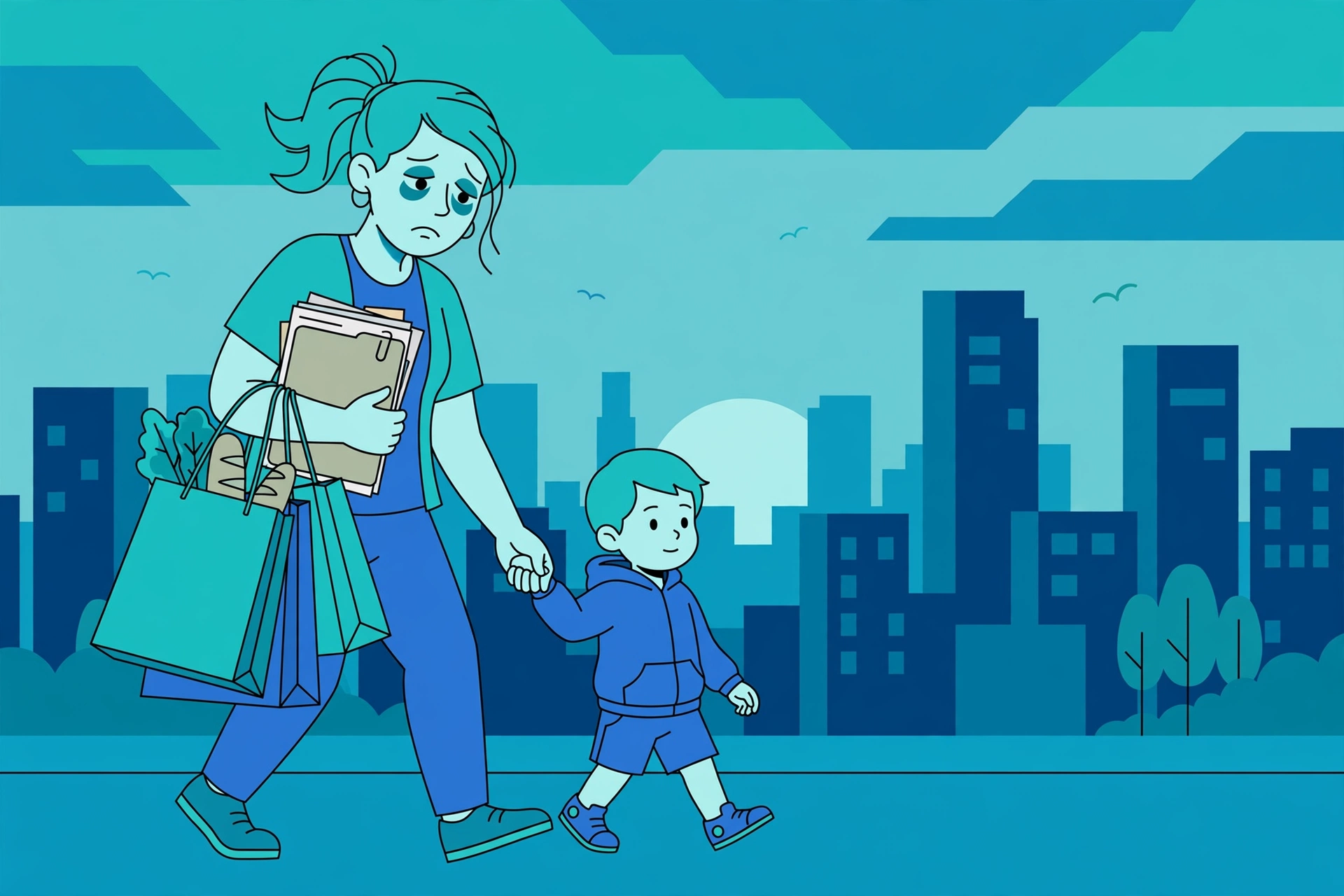
If you are raising children alone and feel tired in a way that sleep never fixes, you are not imagining it. What you feel has a name increasingly used by mental health professionals: single parent stress syndrome, a state of chronic exhaustion far beyond an ordinary hard week. Understanding it is the first step toward easing it.
Key Points
- Single parent stress syndrome (SPSS) describes the chronic stress, burnout, guilt, and emotional depletion many solo parents experience when carrying every role alone.
- SPSS is not a formal clinical diagnosis, but its effects on mental and physical health are very real.
- Common signs include constant fatigue, anxiety, irritability, brain fog, emotional numbness, and frequent crying.
- The main drivers are financial pressure, social isolation, decision fatigue, stigma, and the absence of a partner to share the mental load.
- Recovery comes through naming the problem, micro self-care, practical load-sharing, community support, and professional help when needed.
What Is Single Parent Stress Syndrome?
Single parent stress syndrome describes the intense, long-lasting stress of navigating parenthood without a partner to share the burden. It is not yet a formal psychiatric diagnosis, but clinicians recognise the pattern clearly: one person acting as breadwinner, caregiver, housekeeper, decision-maker, and emotional anchor, with nobody to hand the weight to at day’s end.
Think of it as burnout that never gets a weekend off. Ordinary stress rises and falls; you have a hard day, you rest, you recover. SPSS is what happens when stress never fully releases, week after week, until exhaustion becomes your normal state.
How SPSS Differs from Ordinary Parental Burnout
Parental burnout can affect any caregiver. SPSS shares its features, emotional exhaustion, detachment, feeling not good enough, but runs deeper and lasts longer. A partnered parent who burns out usually has someone who can notice and step in. A single parent has no backup system. SPSS is also tightly bound to financial instability, emotional isolation, and cultural pressure to look as though you are managing fine. Parental burnout is often the beginning; SPSS is what develops when it goes unaddressed for a long time.
What Causes Single Parent Stress Syndrome?
The Relentless Mental Load
Every day brings dozens of solo decisions: meals, fevers, school complaints, bills. This constant decision-making produces decision fatigue, a genuine cognitive depletion that leaves you forgetful and overwhelmed by small choices. Over months, the unrelenting mental load changes how your brain functions.
Financial Strain
One income must cover everything a household needs, creating a background hum of anxiety that never quiets. Research consistently links financial hardship in single-parent homes to higher rates of anxiety and depression. In South Asia, a divorced or widowed parent may also face social expectations to manage independently while cultural norms limit earning options, a painful double bind.
Isolation and Stigma
Single parents often describe a deep loneliness, not from being physically alone, but from having no one who truly shares the responsibility. Single mothers in conservative communities may additionally face judgmental relatives and intrusive questions, which pushes many to hide their struggles instead of seeking help, deepening the isolation further.
Signs and Symptoms of SPSS
SPSS shows up across emotions, body, and behaviour. A persistent cluster of these signals deserves attention.
Emotional and Mental Signs
- Constant fatigue that sleep does not fix
- Anxiety, racing thoughts, dread about ordinary tasks
- Irritability and outbursts over minor issues
- Brain fog, forgetfulness, difficulty concentrating
- Feeling numb, detached, or on autopilot
- Loss of interest in things you once enjoyed
- Persistent guilt about not doing enough
- Crying easily, sometimes without a clear trigger
Physical and Behavioural Signs
- Headaches, muscle tension, back and neck pain
- Digestive problems, appetite changes
- Trouble falling or staying asleep, waking unrefreshed
- Frequent colds and infections
- Withdrawing from friends and social contact
- Snapping at your children, then drowning in guilt
- Neglecting your own health and meals
None of these are character flaws. They are your mind and body signalling that the load has exceeded your resources for too long.
How SPSS Affects You and Your Children
When stress stays switched on for months, it damages the systems it was meant to protect. Chronic stress is linked to high blood pressure, heart disease, weakened immunity, and digestive disorders, and it raises the risk of clinical anxiety and depression. Some single parents describe trauma-like responses, hypervigilance and intrusive worry, especially if the road to single parenthood involved domestic violence, a painful divorce, or bereavement.
Children are sensitive to a parent’s emotional state; research in the Journal of Affective Disorders found that maternal depression driven by parenting stress raised children’s risk of anxiety and depressive symptoms. But children do not need a perfect parent. They need one who tries and repairs the connection after hard moments. Getting support for your own stress is one of the most protective things you can do for them.
How to Cope with Single Parent Stress Syndrome
Name It and Drop the Shame
Recognition comes first. Say plainly: I am dealing with chronic stress from parenting alone, and it is affecting me. Naming it moves the problem out of the shadows, where shame feeds it, and into the open, where you can work on it. Struggling does not mean failing; it means carrying more than one person was meant to carry.
Micro Self-Care That Fits Real Life
Forget spa days. Five minutes of slow breathing before the children wake, a short walk, stretching while dinner cooks, stepping outside for air, these genuinely reset the nervous system. Brief daily relaxation practices lower stress hormones measurably. Protect these minutes the way you protect your children’s bedtime.
Reduce the Load Practically
Write down everything you are juggling; the mental load feels heaviest when it lives only in your head. Then simplify: repeat weekly menus, lower housekeeping standards without apology, batch errands, and say no to non-essential commitments. Ask one relative to watch the children for two hours so you can rest, swap childcare with a neighbour, or join a single-parent community online. Boundaries are not rudeness; they are survival.
When to Seek Professional Help
Self-help has limits, and recognising them is wisdom. Speak to a mental health professional if you feel hopeless most days, anxiety or low mood interferes with work or parenting, you have thoughts of harming yourself, or physical symptoms persist despite rest. If private therapy is unaffordable, university psychology departments, NGO counselling services, and community mental health programmes often provide low-cost or free sessions.
Frequently Asked Questions
Is single parent stress syndrome a real diagnosis?
Not formally; it appears in no diagnostic manual. But it describes a real, recognisable pattern of chronic stress and burnout that clinicians see regularly. The coping strategies and treatments used for burnout, anxiety, and depression apply here too.
How is SPSS different from just being tired?
Ordinary tiredness improves with rest. SPSS does not. If you sleep through the night and still wake depleted, and exhaustion comes paired with numbness, irritability, or guilt, you are dealing with something deeper than a sleep deficit.
Can SPSS cause physical illness?
Yes. Chronic stress is associated with headaches, muscle pain, digestive issues, weakened immunity, high blood pressure, and sleep disorders. See a doctor to rule out medical causes while also addressing the stress behind them.
Will my stress harm my children permanently?
Children are resilient. What matters most is the overall pattern of your relationship, not any single bad day. Warm, repairing relationships protect children, and getting help for yourself is one of the best things you can do for them.
What is the fastest way to feel some relief?
Start small: name what you feel, write down your mental load, take one genuine break today, and ask one person for one specific kind of help. Small, repeated relief accumulates; grand overhauls rarely survive a single parent’s schedule.
Key Takeaways
- Single parent stress syndrome is chronic, layered burnout from carrying every role alone, legitimate even without a formal diagnosis.
- Watch for the cluster: unrefreshing fatigue, anxiety, irritability, brain fog, numbness, guilt, and persistent physical symptoms.
- Financial strain, isolation, decision fatigue, and stigma need practical answers, not just positive thinking.
- Small daily actions, naming the problem, micro self-care, written load lists, and firm boundaries, create real relief.
- Support is a strategy, not a weakness: lean on family, friends, community, and professionals.
- Professional help when symptoms are severe protects both you and your children.
