



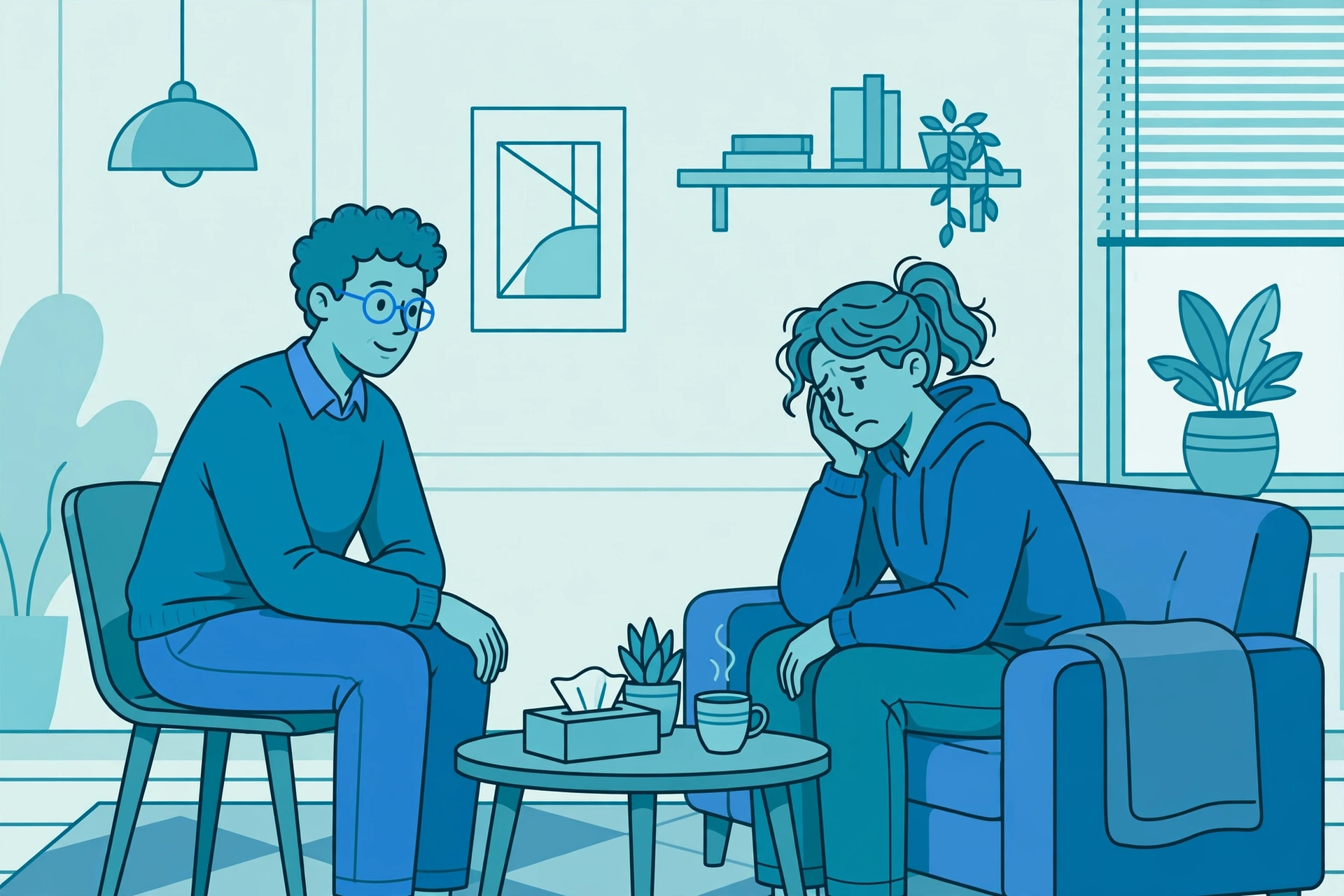
Divorce is consistently ranked among the most stressful experiences a person can face — and yet most people try to carry it entirely alone. If you have been wondering whether your pain is “serious enough” to deserve professional help, let us answer that plainly: you do not have to wait until you are falling apart. Our editorial team has prepared this guide to help you recognize the signs, understand what therapy can actually do for you, and take the first step with confidence.
Key Points
- Persistent sleep problems, loss of interest, and rising substance use for more than two weeks are strong signals to seek help.
- Divorce distress can develop into clinical depression or anxiety — a professional can tell the difference and treat it.
- Therapy during divorce is not only crisis care; it also helps with decision-making, co-parenting, and rebuilding identity.
- Options include individual therapy, divorce coaching, and child or family counseling — each serves a different purpose.
- Stigma, cost, and access are real barriers, especially in South Asia, but practical solutions exist.
Why Divorce Hits Mental Health So Hard
Ending a marriage is not only a legal event. It is the loss of a shared future, a daily routine, a home, and often a large part of your identity. Psychologists describe divorce as a form of grief — you are mourning a living person and a life that will not happen. That grief arrives alongside very real practical threats: financial insecurity, housing changes, custody fears, and social judgment.
Research consistently links divorce to higher rates of depression and anxiety, with ongoing conflict keeping stress hormones elevated for months. Your body is responding to a prolonged threat to your safety and stability — recognizing this is not weakness, it is biology, and it is exactly why professional support exists.
Clear Signs It Is Time to See a Professional
Emotional red flags
Seek help promptly for sadness, emptiness, or hopelessness persisting most of the day for over two weeks; panic attacks or constant racing worry; intense rage that leads to regretted words or actions; or any thoughts of harming yourself. The last of these is an emergency — contact a crisis helpline or emergency services in your country immediately.
Physical and behavioral red flags
Warning signs include sleeping less than four to five hours a night for weeks, major appetite changes, constant exhaustion, and new or increased use of alcohol, sleeping pills, or other substances to get through the day. Functional decline is another key marker: repeatedly missing work, neglecting bills or court deadlines, or withdrawing from everyone around you for a month or more.
When your children are struggling
Children often show divorce distress differently from adults. Consider professional support for your child if you notice falling grades, frequent nightmares, sudden aggression or withdrawal, loss of interest in friends and activities, or physical complaints like stomachaches with no medical cause. A child therapist gives them a neutral space to process feelings they may be hiding to protect you.
What a Mental Health Professional Actually Does During Divorce
Many people imagine therapy as simply “talking about feelings.” In divorce work, it is far more practical than that.
Individual therapy
A therapist helps you process grief and anger safely, identify thinking patterns that keep you stuck, and build coping skills for daily life. It also sharpens judgment: clients who manage emotions well consistently make better financial and custody decisions than those running on pure distress.
Divorce coaching and collaborative roles
Some professionals act as divorce coaches rather than therapists. A coach does not treat mental illness; instead they help you communicate clearly, prepare for negotiations, and stay focused on long-term goals during mediation or court. Involving one early — before emotions drive your legal decisions — often saves both money and regret.
Support for the whole family
Family counselors help co-parents build a workable parenting plan and reduce children’s exposure to conflict. Even a few joint sessions on communication rules can dramatically lower the emotional temperature for everyone.
Therapy Approaches That Work Best in Divorce
Not all therapy is the same. These evidence-based approaches are especially effective during separation:
Cognitive behavioral therapy (CBT)
CBT helps you catch and challenge catastrophic thoughts — “I will never recover,” “My children are ruined” — testing them against reality and replacing them with balanced ones. This reduces anxiety and restores a sense of control.
Grief counseling and acceptance-based approaches
Grief-focused counseling validates mourning instead of rushing you past it. Acceptance and commitment therapy (ACT) teaches you to acknowledge painful emotions without letting them dictate your actions — invaluable in custody negotiations and co-parenting.
Trauma-informed care
If your marriage involved emotional, verbal, or physical abuse, standard talk therapy may not be enough. Trauma-informed therapists understand how abuse reshapes the nervous system and rebuild your sense of safety first — mention this when choosing a therapist.
Overcoming Barriers: Stigma, Cost, and Access
In Pakistan and across South Asia, seeking therapy during divorce carries extra weight. Divorce itself is stigmatized — particularly for women — and admitting you need psychological help can feel like confirming the community’s worst judgments. Many people also face very practical obstacles: therapy can be expensive, qualified therapists are concentrated in major cities, and family members may dismiss the idea entirely.
These barriers are real, but not walls. Online therapy has expanded access, with many Pakistani psychologists offering video sessions at lower fees than in-person clinics. University psychology departments and nonprofits in larger cities often run low-cost counseling clinics. Therapy is confidential — you need not announce it. And remember: seeing a professional during divorce is no different from hiring a lawyer for the legal side.
How to Choose the Right Professional
What to look for
Look for a licensed psychologist, psychiatrist, or counselor with specific experience in divorce, separation, or family conflict — general experience is helpful, but divorce brings unique legal and co-parenting dimensions. Ask directly: “Have you worked with clients going through divorce?” A good fit also means someone whose manner feels safe and non-judgmental to you personally.
What to expect in the first session
The first session is mostly assessment: your history, current stressors, symptoms, and goals. You are also interviewing them — notice whether you feel heard rather than judged. It is completely acceptable to switch therapists if the fit is wrong; that is not failure, it is good judgment about your own care.
Frequently Asked Questions
Is it normal to need therapy during divorce, or does it mean I am not coping?
It is completely normal. Divorce ranks alongside bereavement in life-stress scales, and seeking professional support is a sign of strength and self-awareness, not failure. Most people who enter therapy during divorce say they wish they had started sooner.
What is the difference between a therapist, a counselor, and a divorce coach?
Therapists and counselors are trained to treat emotional and mental health conditions and help you process deep feelings. A divorce coach focuses on practical strategy — communication, negotiation preparation, and goal-setting — without treating mental illness. Many people benefit from both at different stages.
How long does therapy during divorce usually take?
It varies widely. Some people find that eight to twelve sessions of focused work carry them through the acute phase. Others continue longer to rebuild identity and relationship patterns after the divorce is finalized. Your therapist should review progress with you regularly rather than keeping you indefinitely.
Can therapy help if my ex-partner refuses to participate?
Yes. Individual therapy is entirely about you — your coping, your decisions, your healing. You cannot control your ex-partner’s choices, but you can change how their behavior affects you, which often reduces conflict on its own.
Will what I say in therapy be used against me in court?
In most cases, therapy records are confidential and protected. However, confidentiality rules vary by country and situation, especially in custody disputes. Ask your therapist upfront about the limits of confidentiality in your jurisdiction so you can speak freely with full knowledge.
Key Takeaways
- You do not need to hit rock bottom to deserve professional help — earlier support leads to better outcomes.
- Persistent sleep loss, hopelessness, substance use, and functional decline are clear signals to reach out.
- Therapy improves not only your wellbeing but also the quality of your legal and parenting decisions.
- Choose a licensed professional with divorce experience, and do not hesitate to switch if the fit is wrong.
- Stigma and cost are real obstacles, but online therapy and low-cost clinics are expanding options every year.
