



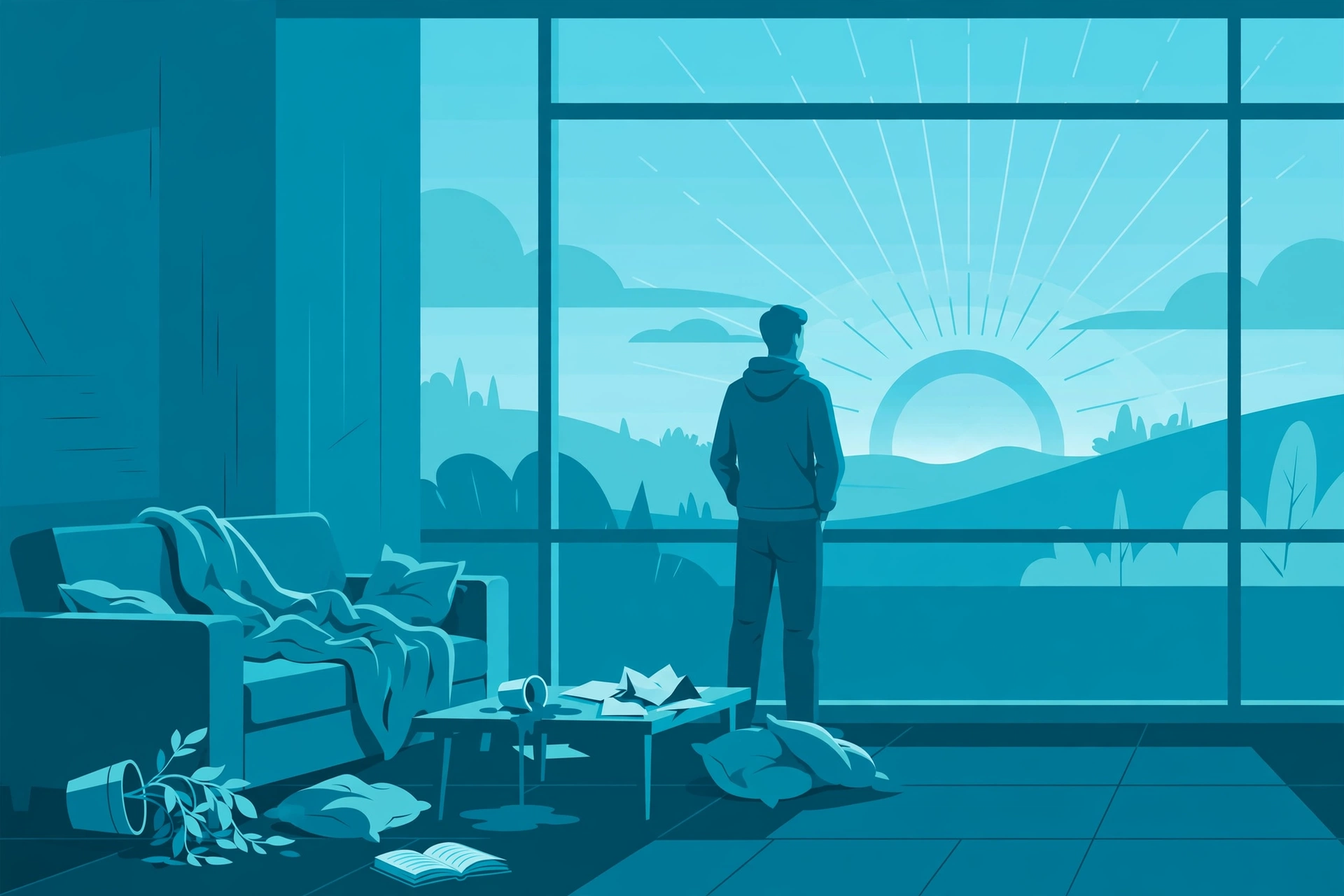
Home is supposed to be where you recharge, but for many people it is the place where they feel most drained. Stress from home is a quiet, underestimated problem: constant tension, criticism, or chaos under your own roof slowly chips away at your mental health. If coming home fills you with dread rather than relief, this guide will help you recognise the warning signs, understand why home stress hits so hard, and find practical ways to protect yourself when moving out is not an option.
Key Points
- Stress from home is the emotional and mental toll of living in a tense, chaotic, or unsupportive household.
- Warning signs include feeling drained at home, walking on eggshells, persistent guilt or shame, sleep and appetite changes, and withdrawing from people you love.
- Home stress hits harder than work stress because there is no escape; the place meant to restore you becomes the place that depletes you.
- Normal family friction differs from a harmful home: occasional arguments are normal, but constant dread, fear, or erosion of self-worth are not.
- When you cannot leave, boundaries, personal routines, and outside support can still significantly reduce the damage.
- Abuse is never acceptable; if you are unsafe, reach out to a trusted person or professional support immediately.
Normal Friction vs. a Genuinely Stressful Home
Every family argues. Occasional disagreements, bad moods, and busy seasons are normal and usually resolve on their own. A genuinely stressful home is different in pattern, not just intensity: the tension rarely lifts, you feel relief when you leave and dread when you return, and your confidence and peace steadily shrink. A useful test: if you regularly wake up already anxious about the day at home, the problem has moved beyond ordinary friction.
Warning Signs That Stress from Home Is Affecting Your Mental Health
These signs often develop so gradually that people dismiss them. Taken together, they paint a clear picture.
Emotional Signs
You feel emotionally drained after time with your family, and walk on eggshells to avoid triggering someone’s anger or criticism. Persistent guilt or shame, anxiety that peaks at home, tearfulness over small things, and a sense of helplessness are all red flags. You may notice your confidence and interests quietly fading.
Physical Signs
The body keeps score. Chronic home stress commonly shows up as headaches, muscle tension, stomach problems, or fatigue that rest does not fix. Sleep is often the first casualty: difficulty falling asleep, waking in the night, or sleeping too much. Appetite changes, either eating for comfort or losing interest in food, are common. Some people notice their jaw clenching the moment they enter the house.
Behavioural Signs
You may start withdrawing from friends, skipping social events, or losing interest in activities you once enjoyed. Difficulty concentrating and constant procrastination creep in. Some people cope by staying out of the house as much as possible, throwing themselves into work or errands to avoid going home. Others turn to unhealthy coping, such as excessive screen time or overeating, to numb the tension. Irritability that spills onto people outside the home is another sign the stress has overflowed.
Signs in Children and Teenagers
Children cannot always name what is wrong, so they show it. Watch for clinginess or fearfulness in young children, sudden drops in school performance, withdrawal from friends, aggression, or physical complaints like stomach aches with no medical cause. Teenagers may become secretive or anxious, and research shows that teenagers who perceive their home as chaotic face higher risk of depression and anxiety in young adulthood.
Why Stress at Home Hurts More Than Stress Anywhere Else
Work stress ends when you leave the office; home stress follows you into your bedroom. Home is meant to be the safe base where you recover, so when it becomes the source of harm, there is nowhere left to restore yourself. Criticism from a parent or spouse cuts deeper because of the love, loyalty, and dependency involved. In cultures where family honour and obedience are central values, admitting home is stressful can feel like betrayal, which keeps people silent longer. Add financial dependence, shared space in joint families, and pressure to keep up appearances, and many feel genuinely trapped.
Coping When You Cannot Just Leave
Much advice assumes you can simply walk away. In reality, financial dependence, joint-family living, young children, or cultural expectations mean many people must cope from within the home. These strategies are designed for exactly that. If any family members are willing, household-level changes like device-free meals and predictable routines help too.
Set Boundaries, Even Small Ones
Boundaries are not walls; they are rules about how you will be treated. Limit the time you spend in tense situations, calmly decline to participate in shouting matches, and state what behaviour you will not accept. Keep it short and steady: “I will not continue this conversation while we are shouting. I will talk when we are both calm.” Then follow through. Consistency matters more than eloquence.
Create Your Own Calm Space and Routines
Claim a small corner of the home as yours, even if it is just a chair by a window. Build personal routines that steady you: a morning walk, prayer or meditation, journaling, or a consistent bedtime. These small rituals give your nervous system regular moments of safety.
Build Support Outside the Home
No one should face home stress alone. Confide in a trusted friend, a relative outside the household, a mentor, or a counsellor. In Pakistan, where mental health services can be costly and stigma is real, options include university counselling centres, NGO-run helplines, community and faith-based support, and low-cost online therapy. Even one person who validates your experience can dramatically reduce the isolation that home stress creates.
Protect Your Inner Life
When the outer environment is stressful, your inner life needs extra care. Write down your feelings rather than letting them swirl. Remind yourself that someone else’s criticism says more about them than about your worth. Keep one meaningful activity, a skill, a hobby, a study goal, that belongs entirely to you and that home tension cannot touch.
When to Seek Help, and What Counts as an Emergency
Seek professional support if home stress is causing persistent anxiety or depression, if you cannot function at work or school, if children are showing behavioural changes, or if coping strategies have not helped after several weeks. A counsellor can help you build a personalised plan. This is urgent if you are experiencing physical abuse, threats, or sexual abuse: your safety comes first. Confide in someone you trust outside the home, and know that leaving an abusive situation is an act of courage, never of disloyalty.
Frequently Asked Questions
Is it normal to feel stressed at home sometimes?
Yes. Every household goes through stressful phases: exams, financial squeezes, illness, or grief. It becomes a concern when the stress is constant, you dread going home, or your sleep, mood, or relationships suffer for weeks.
How can I cope with a stressful home if I cannot move out?
Focus on what you can control: personal boundaries, your own routines and calm space, support from people outside the home, and healthy daily habits like sleep, movement, and journaling. Small household agreements, such as device-free meals, can also help if any family members are willing.
Can a stressful home cause depression?
Yes. Research consistently links chronic household stress and perceived home chaos to higher rates of anxiety and depression, in both adults and children. If low mood, hopelessness, or loss of interest persist for more than two weeks, consider speaking with a mental health professional.
What is the difference between a stressful home and a toxic one?
A stressful home is strained by pressure, conflict, or chaos, but the people in it generally care and can change with effort. A toxic home involves persistent patterns of control, manipulation, humiliation, or abuse that damage your sense of self. Stressful homes need better strategies; toxic or abusive ones need boundaries, outside support, and sometimes distance.
How do I talk to my family about the stress without starting a fight?
Choose a calm moment, not the middle of a conflict. Use “I” statements about your own feelings rather than accusations, keep it specific and brief, and propose one small change instead of listing every grievance. If conversations always explode, a neutral third party such as a counsellor can help the family talk safely.
Key Takeaways
- Stress from home is real: dread of going home, walking on eggshells, and emotional exhaustion are its hallmark signs.
- It affects mind, body, and behaviour, and children absorb it even when adults try to hide it.
- Occasional friction is normal; constant dread, fear, or shrinking self-worth signal a deeper problem.
- When leaving is not an option, boundaries, personal routines, outside support, and small household changes still make a meaningful difference.
- Reducing chaos, restoring routines, and protecting moments of genuine connection calm a tense household.
- Abuse is never acceptable: if you are unsafe, seek help from trusted people or professional services without delay.
