



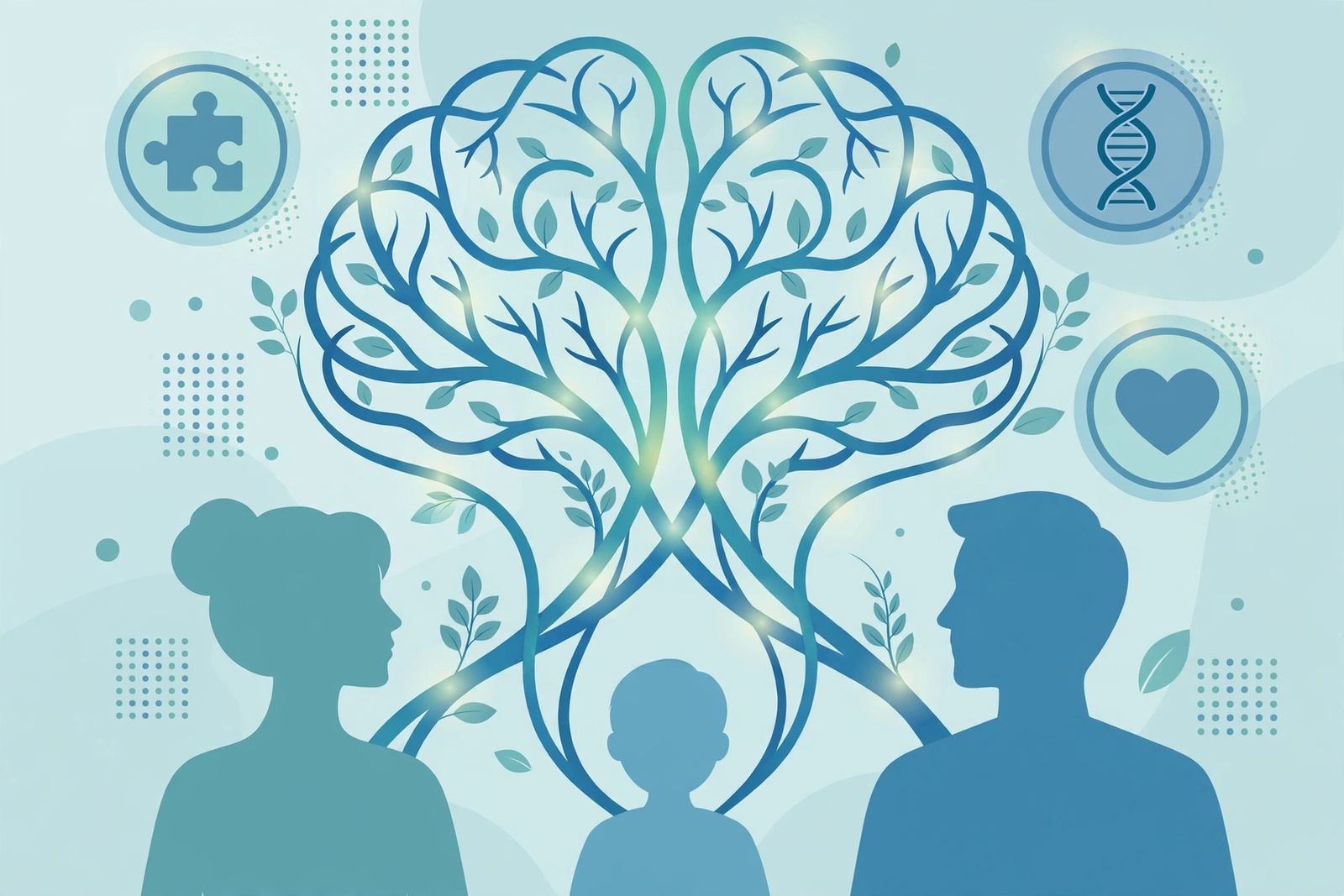
Genetics and ADHD in Children
ADHD is one of the most heritable conditions in child psychology. Studies on twins and families show that about 70 to 80 percent of ADHD risk comes from genes.
This means if one parent or sibling has ADHD, the likelihood of another child being affected is much higher than chance.
The genes linked to ADHD are mostly involved in how the brain processes dopamine, a neurotransmitter responsible for motivation, focus, and reward. Variations in dopamine transporter and receptor genes change how signals move between brain cells.
When this system is disrupted, a child struggles to regulate attention and impulses.
Children may inherit ADHD tendencies in different ways. Some show hyperactivity, others display inattentiveness, and many experience a combination. It’s not a single gene but rather a network of small genetic differences that add up to influence brain development.
Another important finding is that genetics interact with environment. For example, a child may carry a gene that makes them vulnerable, but whether ADHD symptoms develop depends on exposure to certain risks during pregnancy or early life. This explains why not every child with a family history of ADHD shows symptoms.
Dopamine Transport and Brain Chemistry
Dopamine is central to the ADHD story. When dopamine levels are too low or receptors are less sensitive, the brain has trouble experiencing reward from everyday tasks.
That is why children with ADHD often avoid schoolwork or chores but can hyper-focus on video games, which give instant dopamine feedback.
Research shows that stimulant medications like methylphenidate work precisely by improving dopamine transmission. By correcting this imbalance, the child’s ability to focus and control impulses improves. This link between dopamine and genetics is one of the strongest biological explanations for ADHD.
Heritability and Family Patterns
Families often notice ADHD symptoms across generations. A father who was restless at school may see the same traits in his son.
A mother who was always “daydreaming” may find her daughter struggles with inattentive ADHD. These patterns highlight the inherited aspect of the condition.
While heritability is high, genes are not destiny. Supportive environments, early diagnosis, and interventions like behavioral therapy can significantly improve outcomes for children who inherit ADHD vulnerabilities.
Pregnancy and Birth-Related Risks
What happens during pregnancy and birth plays a major role in shaping a child’s brain. While genetics provide the foundation, prenatal and perinatal factors often act as the trigger that brings ADHD symptoms to the surface. These risks do not guarantee ADHD, but they significantly increase the likelihood when combined with genetic vulnerability.
Smoking, Alcohol, and Maternal Stress
Nicotine and alcohol are among the most researched prenatal risk factors. When a mother smokes during pregnancy, nicotine crosses the placenta and directly impacts fetal brain development. It disrupts dopamine pathways, which are already central to ADHD. Children exposed to smoking in the womb show higher rates of inattention and hyperactivity later in life.
Alcohol exposure works in a similar way. Even moderate drinking during pregnancy can affect brain circuits related to self-control and learning. While fetal alcohol spectrum disorder is a distinct condition, many children with prenatal alcohol exposure display overlapping ADHD-like symptoms.
Maternal stress also contributes to risk. High levels of stress hormones such as cortisol affect how the baby’s brain develops, particularly in regions that regulate attention and emotional control. Mothers experiencing untreated anxiety or depression during pregnancy may unknowingly raise the likelihood of ADHD in their child.
Premature Birth and Low Birth Weight
Children born prematurely often have brains that are less fully developed at birth. This immaturity can affect areas such as the prefrontal cortex and cerebellum, both of which are critical for attention and planning. Premature infants are more likely to show developmental delays that later manifest as ADHD.
Low birth weight is another risk factor. Studies show that children weighing significantly less at birth are at higher risk of attention and behavior regulation problems. Reduced cortical thickness and altered white matter pathways are often observed in these children, both linked to ADHD.
Labor Complications and Oxygen Deprivation
The birthing process itself can sometimes create challenges. If labor is prolonged or complicated, oxygen supply to the baby’s brain may be reduced. Even short periods of oxygen deprivation (hypoxia) can affect brain regions involved in executive function and impulse control.
These birth complications do not always result in ADHD, but they increase vulnerability. When combined with genetic predispositions, they set the stage for symptoms to appear early in childhood.
Why Prenatal and Birth Factors Matter
Understanding these risks helps parents and professionals move beyond myths. ADHD is not simply caused by too much sugar or too much screen time. It begins with how the brain forms, and pregnancy is one of the most sensitive periods of development.
Parents who know these risks can be more proactive about prenatal care and early screening. Doctors can also monitor children with higher risk more closely, ensuring support starts before symptoms become overwhelming.
Environmental and Social Influences
A child’s surroundings play a powerful role in shaping how ADHD develops and expresses itself. While genetics and prenatal risks set the foundation, the environment in which a child grows up can either protect them from symptoms or make them worse. These influences don’t directly “cause” ADHD but often act as triggers that interact with biology.
Lead Exposure and Neurodevelopment
Lead is one of the strongest environmental links to ADHD. Even small amounts of exposure during early childhood can affect the brain’s prefrontal cortex, which controls focus, planning, and impulse regulation. Lead used to be common in older house paint, water pipes, and contaminated soil.
Children exposed to lead often show higher levels of distractibility, poor impulse control, and learning difficulties. Public health efforts to reduce lead in communities have lowered this risk in many countries, but it still exists in areas with older buildings or industrial pollution.
Parents living in older homes or near factories should consider testing household water and checking for peeling paint. Reducing exposure early helps protect the child’s developing brain.
Early Trauma and Family Stress
Psychological and social environments also shape ADHD risk. Children who experience ongoing family conflict, neglect, or trauma often develop ADHD-like symptoms. Stress hormones such as cortisol interfere with brain growth, especially in regions that control emotion and self-regulation.
For example, a child growing up in a household with constant arguments may struggle to concentrate in school, not because they are unwilling, but because their brain is in survival mode. These children may display hyperactivity, aggression, or difficulty staying on task.
Not all children exposed to trauma develop ADHD. However, in children who already have genetic susceptibility, trauma increases the chance that symptoms will be more severe.
Nutrition and Early Childhood Health
Diet and health during early years also play a part. Children lacking essential nutrients such as iron, zinc, magnesium, and omega-3 fatty acids are more likely to show problems with focus and mood regulation. These nutrients are vital for neurotransmitter production, including dopamine and norepinephrine.
Research has shown that children with low omega-3 levels, for instance, often display stronger hyperactivity symptoms. Improving diet with fish, leafy greens, and fortified foods can support brain function and may reduce the severity of ADHD symptoms.
Frequent illness and disrupted sleep in early childhood can also worsen ADHD traits. Inadequate sleep affects attention and increases impulsive behavior, while chronic illness may interfere with school readiness and social development.
Why Environmental Factors Matter
Understanding environmental influences empowers families to take practical action. Unlike genetics, these factors are often changeable. Parents can improve nutrition, reduce toxin exposure, and create calmer, more structured home environments.
When families and schools recognize that stress and environment can worsen ADHD, they can design strategies that minimize triggers. This means children are less likely to be punished for behaviors rooted in biology and more likely to receive support that builds resilience.
Brain Injury and Neurological Factors
While most cases of ADHD are linked to genetics and prenatal development, brain injuries and certain neurological events can also contribute to symptoms. These factors are less common but important to understand, especially if a child suddenly begins to show attention or impulse problems after an accident or illness.
Frontal Lobe Impact on Impulse Control
The frontal lobes, located at the front of the brain, are essential for executive functions like planning, decision-making, and self-regulation. When these areas are damaged, even slightly, a child may lose the ability to pause before acting, organize tasks, or control their emotions.
For example, a child who has experienced a fall, concussion, or traumatic brain injury may start displaying hyperactive or impulsive behaviors similar to ADHD. These symptoms might appear suddenly, contrasting with genetic ADHD, which usually shows up early in life.
Infections and Early Brain Development
Serious infections such as meningitis or encephalitis can also disrupt brain development. These conditions may leave lasting changes in how neurons communicate, leading to difficulties with attention, memory, and impulse control.
While rare, these medical events highlight that ADHD-like symptoms can sometimes stem from illness rather than inherited traits. Doctors carefully consider medical history when evaluating a child for ADHD to rule out these possibilities.
Neurological Delays and Connectivity Issues
Some children show delayed development in brain regions that connect emotional regulation with attention. Brain scans reveal weaker connectivity between networks responsible for focus and those managing emotional reactions. This disconnect makes it harder for the child to shift between tasks, control mood swings, or stay engaged for long periods.
Such neurological delays may not always be linked to obvious injuries. Instead, they can reflect subtle differences in brain maturation that interact with other ADHD risk factors.
Why Neurological Factors Matter
Recognizing neurological contributors to ADHD-like symptoms is essential because it shapes treatment. A child with ADHD triggered by a brain injury may benefit from rehabilitation programs alongside traditional ADHD treatments. Similarly, children recovering from infections may need ongoing cognitive support to rebuild attention and memory skills.
The Interaction of Genes and Environment
ADHD rarely comes from a single cause. Instead, it develops through the interaction of inherited traits and environmental conditions. This explains why two children in the same family may have very different experiences even when they share the same genes.
Epigenetics and ADHD Risk
Epigenetics is the science of how life experiences can switch certain genes on or off. A child may inherit a genetic tendency toward ADHD, but whether it becomes active often depends on prenatal and early-life experiences.
For instance, stress during pregnancy can influence how dopamine-related genes express themselves. Likewise, exposure to toxins or poor nutrition in early childhood may increase the likelihood that vulnerable genes will trigger ADHD symptoms.
This dynamic shows that biology is not fixed. Supportive environments can reduce the impact of inherited risk, while harmful environments can worsen it.
Why Some Children Are More Vulnerable
Not every child with ADHD in their family history develops the disorder. Some remain unaffected because their environment provides protective factors like good nutrition, consistent routines, and emotional support.
Others become symptomatic when multiple risks combine. A child with genetic vulnerability who is also born prematurely and exposed to high family stress is far more likely to show ADHD behaviors than a child with only one of these risks.
This explains the wide variation in ADHD severity. It is not only about what genes a child carries but also about the world they grow up in.
Balancing Nature and Nurture
Parents often wonder if they are to blame for their child’s ADHD. Understanding the gene-environment interaction helps replace blame with compassion. No single factor determines the outcome. Instead, it is a complex balance of nature and nurture.
Families cannot change genetics, but they can influence the environment. By focusing on healthy pregnancy care, reducing toxins, supporting nutrition, and creating structured, loving routines, they can significantly reduce how strongly ADHD symptoms appear.
What Parents Can and Cannot Control
When parents first hear about ADHD risk factors, many feel guilty or overwhelmed. It is important to know that ADHD is not caused by bad parenting. It develops from a mix of biology, environment, and brain development that no single parent can fully control.
Shifting From Blame to Support
Parents cannot change the genes their child inherited. They also cannot undo complications that may have happened during pregnancy or birth. What they can do is recognize these risks early and respond with practical strategies.
Instead of focusing on “why did this happen,” parents can ask, “what can we do next to support our child?” This shift helps the family move from blame to empowerment.
Early Intervention and Screening
What parents can control is how quickly they act once symptoms appear. Early screening allows children to access support before academic and social challenges build up. Pediatricians and school professionals can provide behavior checklists, attention assessments, and developmental evaluations that guide diagnosis.
Parents can also control the environment at home. Consistent routines, positive reinforcement, and a calm emotional climate make it easier for children with ADHD to manage their energy and attention. Even small steps like bedtime schedules or visual reminders reduce stress for both the child and family.
Building a Protective Environment
Protective factors help balance risks. These include strong parent-child relationships, supportive teachers, good sleep, balanced nutrition, and access to community resources. Families who focus on these areas often see major improvements in how children with ADHD function day to day.
Frequently Asked Questions About ADHD Causes and Risk Factors
1. Can ADHD be prevented in children?
No, ADHD cannot be fully prevented because genetics play such a large role. However, reducing environmental risks like smoking during pregnancy, poor nutrition, and toxin exposure can lower severity.
2. Does sugar or screen time cause ADHD?
Neither sugar nor screen time causes ADHD. These may worsen hyperactivity or focus problems but they are not root causes. ADHD is primarily linked to genetics and brain development.
3. If a parent has ADHD, will the child definitely have it?
Not necessarily. While genetics increase risk, many children with ADHD parents never develop symptoms. Early interventions and protective environments make a major difference.
4. Can premature birth lead to ADHD?
Yes, premature birth and low birth weight are significant risk factors. They affect brain maturation, making attention regulation more difficult as the child grows.
5. Do vaccines cause ADHD?
No. Multiple studies show no link between vaccines and ADHD. This is a common myth without scientific evidence.
6. Can head injuries cause ADHD symptoms?
Yes, especially injuries to the frontal lobe. These can create attention and impulse difficulties that mimic or overlap with ADHD.
7. Why are some children more severely affected than others?
Severity depends on the interaction of genetics and environment. Children exposed to multiple risks tend to experience stronger symptoms.
8. Should parents blame themselves if their child has ADHD?
Absolutely not. ADHD is not caused by poor parenting. Parents can’t control genetic and biological risks, but they can provide powerful protective support.
9. Can ADHD appear suddenly after trauma?
ADHD symptoms usually begin early, but trauma or stress can worsen or reveal symptoms that were previously unnoticed.
10. How can parents know if risk factors apply to their child?
By keeping track of prenatal history, family ADHD patterns, and early developmental signs. Screening tools and professional assessments confirm risk more accurately.
Expert Insight: Dr. Ghazala Tahir
As a Life Management Coach and NLP Practitioner, I often meet parents who feel lost when they hear about ADHD risk factors. The most important step is understanding that causes are not about blame. They are about awareness.
When parents learn that ADHD stems from brain chemistry, genetics, and environmental influences, they can respond with compassion instead of guilt. This creates a healthier family atmosphere and helps children thrive.
I encourage families to focus on what they can influence: consistent routines, positive reinforcement, nutrition, and emotional support. These everyday strategies are more powerful than many realize.
Conclusion
ADHD in children does not come from one cause. It is shaped by a mix of genetic, prenatal, environmental, and neurological factors. While parents cannot control everything, they can take steps to reduce risks and strengthen protective environments.
By understanding these causes, families and teachers can approach children with empathy rather than judgment. The more we know about where ADHD comes from, the better we can design support that works in daily life.
