



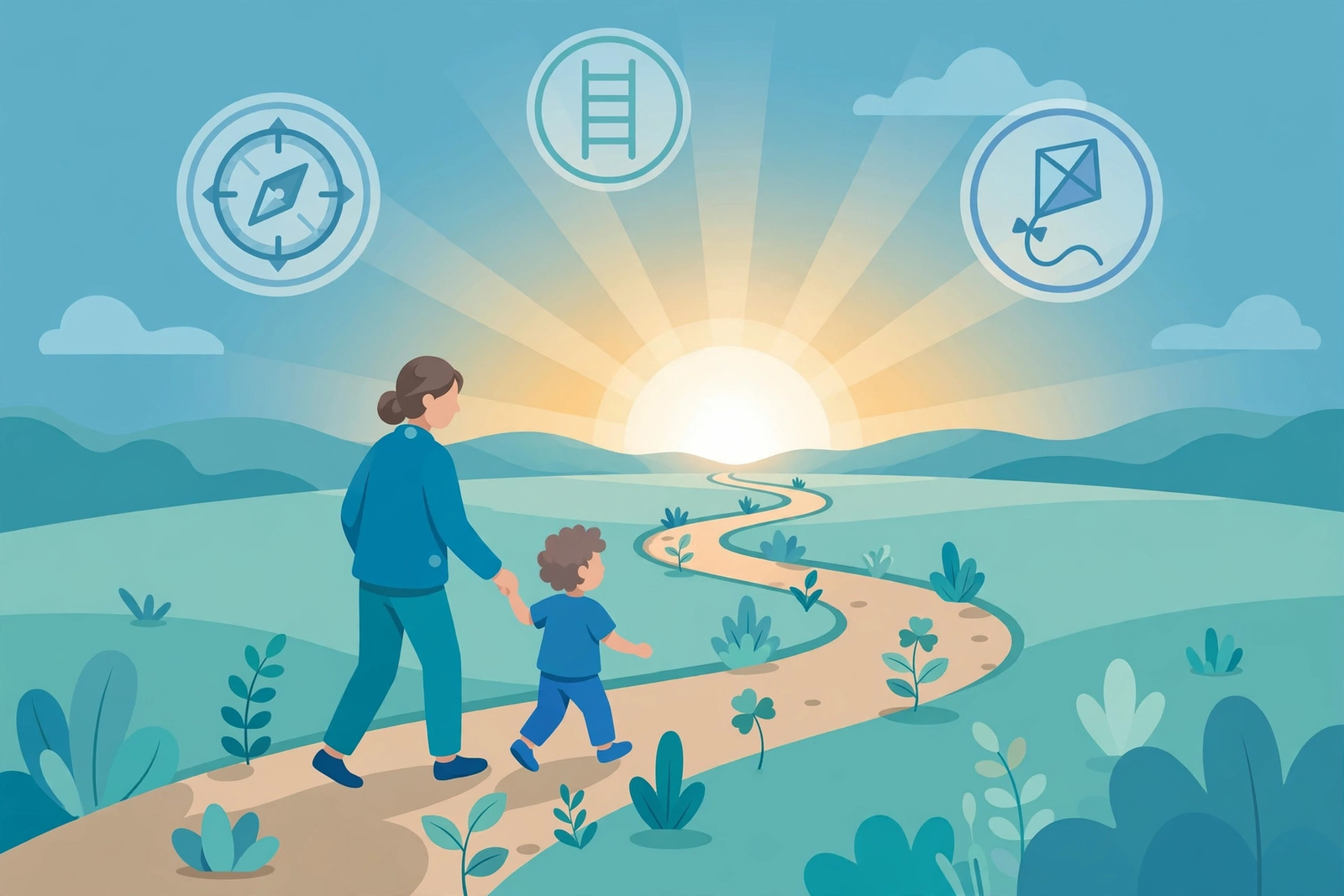
ADHD long-term outlook is one of the biggest questions parents ask after diagnosis. Many wonder: Will my child outgrow ADHD?
Will they struggle forever?
What will their life look like as a teenager or adult?
The truth is,
ADHD is not something most children “outgrow,”
but
it also does not mean a life of limitations.
With the right support, many children with ADHD build strong academic, social, and career paths. Understanding what the future may hold helps families prepare instead of worry.
Do Children Outgrow ADHD?
Some symptoms may lessen with age, especially hyperactivity. Many teens learn coping skills that reduce how strongly symptoms affect daily life. However, research shows that about 60–80% of children continue to have ADHD symptoms into adolescence, and about half still experience them in adulthood.
This doesn’t mean they can’t thrive. It means they may always need strategies to manage attention, planning, and emotional regulation.
Academic Outlook
ADHD affects learning, but it does not limit intelligence. Many children with ADHD perform just as well as their peers when provided with the right supports.
- Students with ADHD often need extended time or special accommodations.
- Early intervention makes a major difference in long-term academic performance.
- Teens with ADHD may need extra support during transitions, like moving from middle to high school.
Emotional and Social Outlook
ADHD can create challenges with self-esteem and relationships. Children may feel misunderstood or criticized more often, which impacts confidence.
- Strong parent-child connections build resilience.
- Social skills training and therapy help improve friendships.
- Teens and adults with ADHD who learn self-advocacy thrive in both social and professional life.
Career and Adult Life Outlook
Adults with ADHD work in every field, from business to science to the arts. In fact, creativity and problem-solving are often strengths of people with ADHD.
However, without support, adults may struggle with:
- Time management
- Meeting deadlines
- Organization
With coaching, accommodations, and the right environment, adults with ADHD build successful careers and meaningful lives.
👉 Can ADHD be a gift? Yes. Many adults say ADHD gives them creativity, energy, and resilience that others admire.
Co-Occurring Conditions and Outlook
The long-term outlook is affected when ADHD coexists with other conditions, such as anxiety, depression, or learning disabilities. These challenges can complicate life but also highlight the importance of comprehensive care.
- Children with both ADHD and anxiety may need ongoing therapy.
- ADHD plus learning challenges often requires school accommodations.
- Early treatment reduces long-term risks.
Long-Term Resilience Factors
Children with ADHD have the best outcomes when:
- They receive early diagnosis and intervention
- Parents and teachers provide consistent support
- They build strong self-advocacy skills
- They develop healthy coping strategies for stress
Protective factors such as positive relationships, stable routines, and community resources make a powerful difference in long-term success.
Common Questions About ADHD Long-Term Outlook
1. Can kids with ADHD live normal lives?
Yes. With support, they can achieve academically, build relationships, and succeed in careers.
2. Does ADHD ever go away completely?
For some, symptoms decrease with age, but most learn to manage ADHD rather than outgrow it.
3. Can ADHD affect college success?
Yes, but accommodations and planning tools help many students thrive in higher education.
4. Is ADHD a disability for life?
It can qualify as a disability under education or workplace laws, but with supports, many people function very well.
5. Can adults with ADHD have successful careers?
Absolutely. Many leaders, entrepreneurs, and creatives credit ADHD traits as strengths.
6. Does ADHD shorten life expectancy?
No. But untreated ADHD increases risks like accidents, stress, or unhealthy habits. Support and structure reduce these risks.
7. Will my child always need medication?
Not always. Some use medication only during certain life stages; others manage with therapy and lifestyle tools.
8. Can ADHD cause problems in relationships?
Yes, but awareness and communication skills help prevent conflicts.
Expert Insight: Dr. Ghazala Tahir
When parents ask me about the future, I remind them: ADHD is not a sentence—it’s a condition that requires support. Outcomes depend less on the diagnosis itself and more on the environment, resources, and encouragement the child receives.
I’ve seen children with severe ADHD grow into confident, capable adults who learn to use their strengths. The key is to stop focusing on limits and start focusing on opportunities.
Conclusion: Hope and Preparation Go Hand in Hand
The ADHD long-term outlook depends on a mix of biology, environment, and support. With early interventions, strong parenting, and resilience skills, children with ADHD can grow into thriving adults.
Parents don’t need to fear the future—they need to prepare for it. The right tools today shape tomorrow’s success.
