



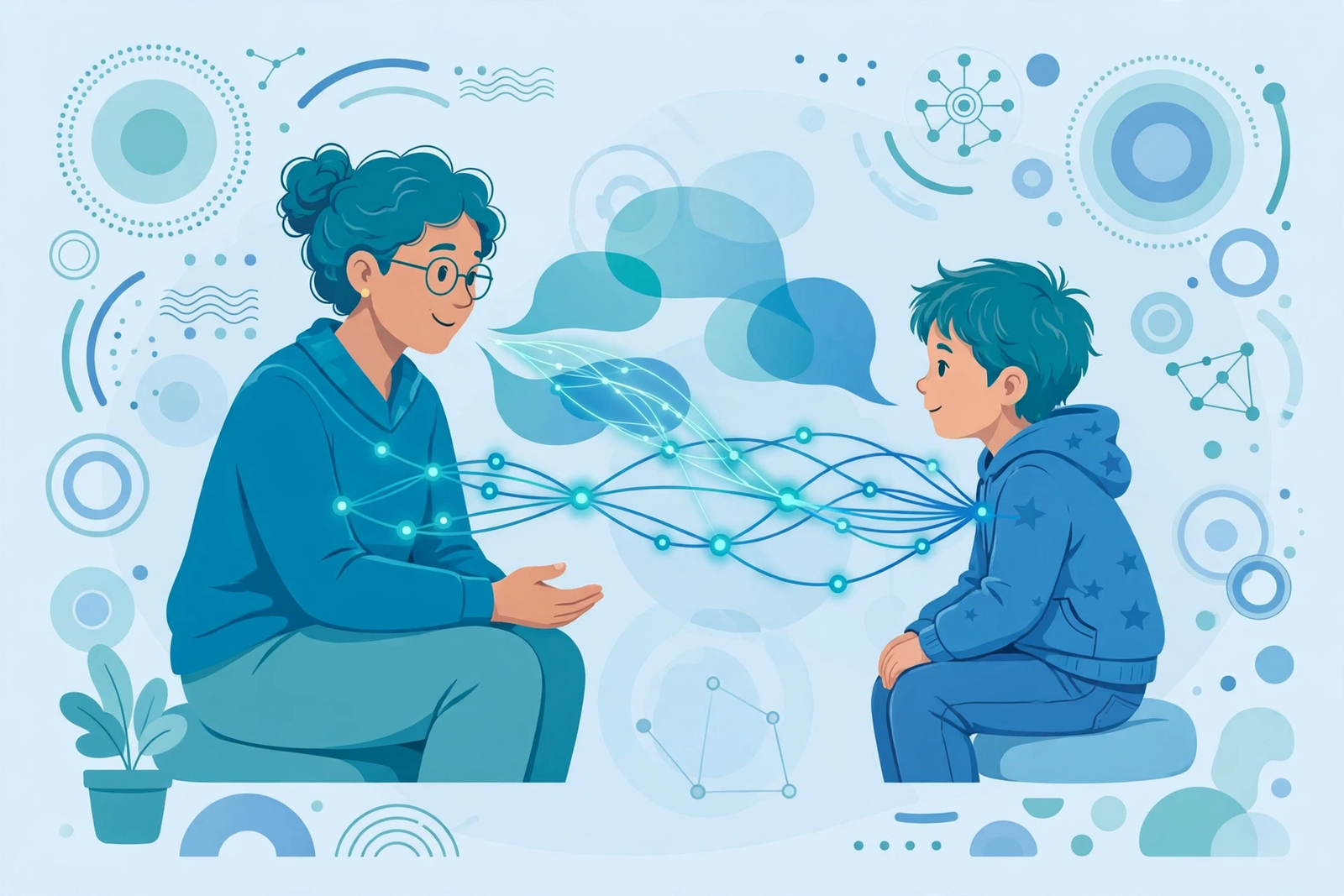
Key Points
- Communication challenges are a core characteristic of Autism Spectrum Disorder (ASD), making communication therapies essential for improving social interactions.
- Speech therapy and augmentative communication methods, such as AAC, are commonly used to enhance verbal and non-verbal communication skills in children and adults with autism.
- Early intervention in communication skills is crucial to improving long-term outcomes and helping individuals with autism thrive in social and educational settings.
- Tailored communication therapies, such as picture exchange systems (PECS) and speech-generating devices, can significantly improve an individual’s ability to express needs and engage with others.
The Role of Communication Therapies for Autism
Communication difficulties are one of the defining features of Autism Spectrum Disorder (ASD). These challenges can range from delays in language development to difficulties with understanding and using verbal and non-verbal communication in social settings. For a person with autism, communicating effectively is essential — it is how they express needs, build relationships, and engage with the world around them. If you are supporting a loved one with autism, understanding communication therapies for autism can open up hopeful new possibilities.
Communication therapies — including speech therapy and augmentative and alternative communication (AAC) methods — play a pivotal role in helping individuals with autism strengthen their communication skills. These therapies offer warm, targeted support that helps a person with ASD express themselves, understand others, and interact more confidently at home, at school, and in the community.
In this article, we will explore the main communication therapies used to support individuals with autism, their benefits, and how they can improve communication and social connection. You will also find gentle guidance on recognizing when extra support might help your family.
1. Speech Therapy for Autism Spectrum Disorder (ASD)
Speech therapy is one of the most widely used interventions for individuals with autism who have difficulties with verbal communication. The goal of speech therapy is to improve language skills, including speaking, understanding language, and using appropriate communication strategies.
1.1 Improving Verbal Communication Skills
For many children with autism, speech therapy focuses on helping them develop the ability to use spoken language more effectively. This includes expanding vocabulary, improving speech clarity, and learning how to use language for functional purposes.
- Expanding Vocabulary: Speech therapists work with individuals to increase their vocabulary and use a broader range of words and phrases. This allows individuals to express themselves more clearly and accurately.
- Improving Speech Clarity: For children who have difficulty articulating sounds or forming clear speech, speech therapy provides exercises to improve articulation, pronunciation, and fluency.
- Using Language Functionally: Speech therapy also focuses on teaching individuals how to use language for practical purposes, such as asking for help, expressing emotions, or following instructions.
1.2 Understanding and Using Non-Verbal Communication
In addition to verbal communication, many individuals with autism struggle with non-verbal communication, including gestures, facial expressions, and body language. Speech therapy helps individuals with autism learn to interpret and use non-verbal cues in social situations.
- Facial Expressions and Eye Contact: Speech therapists teach individuals with autism how to recognize and use facial expressions and eye contact to convey meaning and engage in social interactions.
- Gestures and Body Language: Speech therapy also focuses on teaching the use of gestures and body language to enhance communication. For example, learning to use gestures like waving or pointing can help individuals express themselves when they cannot find the right words.
1.3 Enhancing Social Communication
For many individuals with autism, the challenge lies not only in speaking but also in using communication effectively in social settings. Speech therapy aims to help individuals with autism engage in reciprocal communication, participate in conversations, and understand social rules.
- Turn-Taking in Conversations: One of the key goals of speech therapy is to teach individuals how to take turns in conversations, understand the flow of dialogue, and contribute to social interactions.
- Understanding Social Cues: Speech therapists work with individuals to recognize and respond appropriately to social cues, such as tone of voice, body language, and facial expressions, which are essential for successful social interactions.
2. Augmentative and Alternative Communication (AAC) for Autism
For some individuals with autism, speech therapy alone may not be sufficient to address communication challenges. In these cases, augmentative and alternative communication (AAC) methods can provide additional support. AAC refers to methods that help individuals communicate without relying solely on speech, using tools such as picture exchange systems, sign language, or speech-generating devices.
2.1 Picture Exchange Communication System (PECS)
The Picture Exchange Communication System (PECS) is a popular AAC method that involves using pictures to help individuals with autism communicate their needs and desires. PECS can be especially helpful for individuals who have limited verbal communication skills.
- Using Pictures for Communication: PECS involves using pictures of common objects or activities to convey meaning. For example, a child with autism may use a picture of a snack to communicate that they are hungry.
- Gradual Progression: PECS starts with basic communication, such as requesting items, and progresses to more complex forms of communication, including sentence-building and conversational exchange.
2.2 Speech-Generating Devices (SGDs)
Speech-generating devices (SGDs) are electronic devices that allow individuals to communicate by selecting symbols, words, or phrases that are then spoken by the device. SGDs can be especially helpful for individuals who are non-verbal or have limited speech.
- Customizable Communication: SGDs can be customized with different symbols, pictures, or text to meet the individual’s specific communication needs. These devices allow individuals to express themselves more easily and engage with others.
- Portable and Accessible: Many SGDs are portable, making it easier for individuals to carry their communication tool with them and use it in various environments, such as at school, at home, or in the community.
2.3 Sign Language
Some individuals with autism use sign language as an alternative form of communication. Sign language allows individuals to express themselves using hand gestures and visual signs, which can be an effective way to communicate when verbal speech is challenging.
- Learning Basic Signs: Speech therapists or communication specialists may teach basic signs to children with autism to help them communicate their needs and desires.
- Expanding Vocabulary: For individuals who have learned basic sign language, therapists can work on expanding their vocabulary and incorporating more complex signs to enhance communication.
3. Benefits of Communication Therapies for Autism
Communication therapies offer numerous benefits for individuals with autism, helping them overcome language barriers and develop the skills needed for social interaction, academic success, and independence.
3.1 Improved Communication Skills
The most obvious benefit of communication therapies is the improvement in communication skills. By working with speech therapists and using AAC methods, individuals with autism can gain the ability to express their needs, interact with peers, and engage in meaningful conversations.
- Functional Communication: The ability to use functional communication, such as asking for help or requesting food, can greatly reduce frustration and anxiety for individuals with autism.
- Social Interaction: Improved communication skills can enhance social interactions, allowing individuals with autism to build relationships, participate in group activities, and engage with their peers.
3.2 Increased Independence
Effective communication is essential for independence. By learning to communicate more effectively, individuals with autism can become more self-sufficient in daily tasks, such as ordering food, asking for assistance, or expressing preferences.
- Expressing Needs: Individuals with autism who are able to communicate their needs are better able to navigate their environment and advocate for themselves.
- Navigating Social Situations: With improved communication skills, individuals with autism can participate in social situations with greater ease and confidence, promoting a sense of autonomy and self-assurance.
3.3 Enhanced Quality of Life
Improved communication skills can lead to an enhanced quality of life for individuals with autism. When individuals can communicate more effectively, they are better able to express their emotions, engage in relationships, and participate in activities they enjoy.
- Reduced Stress: Being able to communicate needs and emotions reduces the likelihood of frustration and behavioral outbursts, leading to a more peaceful and fulfilling life.
- Social Connections: Improved communication also leads to stronger social connections, allowing individuals with autism to build friendships and engage in their communities.
4. Red Flags to Watch For
Recognizing communication difficulties early on can help ensure timely intervention and support. Some red flags to watch for in children with autism include:
- Limited verbal communication or speech delays, particularly after the age of two.
- Difficulty with social interaction, such as lack of eye contact or trouble engaging in conversations.
- Limited use of non-verbal communication, such as gestures or facial expressions.
- Difficulty understanding social cues or responding appropriately to others.
Frequently Asked Questions
1. What is the best therapy for improving communication in children with autism?
The best therapy depends on the individual’s needs, but speech therapy and augmentative and alternative communication (AAC) methods, such as PECS and speech-generating devices, are often highly effective for improving communication in children with autism.
2. Can non-verbal children with autism learn to communicate?
Yes, non-verbal children with autism can learn to communicate through therapies such as speech therapy, sign language, and AAC methods like PECS or speech-generating devices.
3. How long does communication therapy take to show results?
The timeline for results varies depending on the child’s specific needs and the type of therapy. However, with consistent therapy and support, most children show progress in their communication skills over time.
Key Takeaways
Communication therapies play a crucial role in supporting individuals with Autism Spectrum Disorder (ASD). Through speech therapy, augmentative communication methods, and social skills training, individuals with autism can improve their ability to communicate, engage socially, and lead more independent lives. Early intervention and consistent support are key to helping individuals with autism develop the communication skills necessary for success.
Contact me today for personalized guidance on communication therapies for Autism Spectrum Disorder (ASD).
