



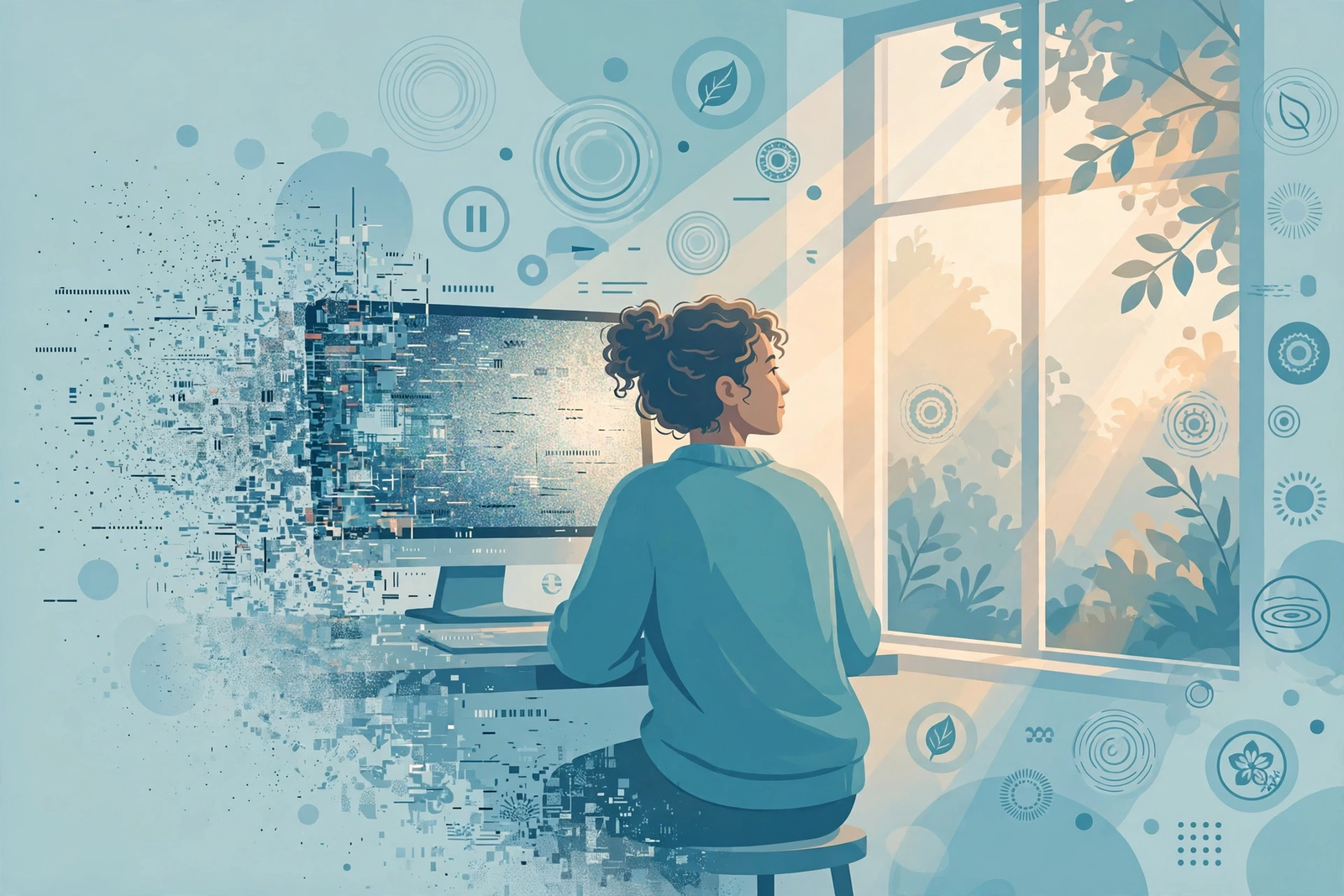
If you spend a lot of time on screens — and let’s be honest, most of us do — you may have noticed that your hallucinogen persisting perception disorder symptoms feel louder after long hours on your phone or computer. You are not imagining it. Modern life bathes us in constant light, motion, and high-contrast visuals, and for a sensitive visual system, that can be a lot. The good news? You do not have to give up technology. In this guide, we will explore why screens can intensify symptoms and share practical, gentle ways to make your digital life kinder to your eyes.

Key Points
- Prolonged screen use can intensify visual symptoms
- Brightness, contrast, and motion increase sensory load
- Digital habits influence nervous system regulation
- Simple adjustments reduce visual overstimulation
- Balanced technology use supports long-term stability
Understanding Visual Overstimulation in Hallucinogen Persisting Perception Disorder
Modern life involves constant exposure to screens, fast-moving visuals, and high-contrast displays. For someone with hallucinogen persisting perception disorder, this level of stimulation can overwhelm the visual processing system.
Overstimulation does not cause the condition, but it can make symptoms more noticeable. Learning to manage your visual input can genuinely reduce discomfort and fatigue — and that is empowering.
How Screens Affect Visual Processing
Screens deliver continuous streams of light, motion, and contrast. Your brain has to work harder to process all of this — especially when visual sensitivity is already heightened. Here is what is happening.
Motion and Refresh Effects
Scrolling, animations, and rapid transitions can intensify trailing effects or visual noise. Fast-moving content simply demands more from your visual system. If you notice symptoms flaring while scrolling, that is your cue to slow down.
Brightness and Contrast
High brightness, sharp contrast, and stark white backgrounds often worsen light sensitivity. Using a bright screen in a dark room can further strain your visual system. Small display tweaks — which we will get to — can make a surprising difference.
Signs of Digital Overload
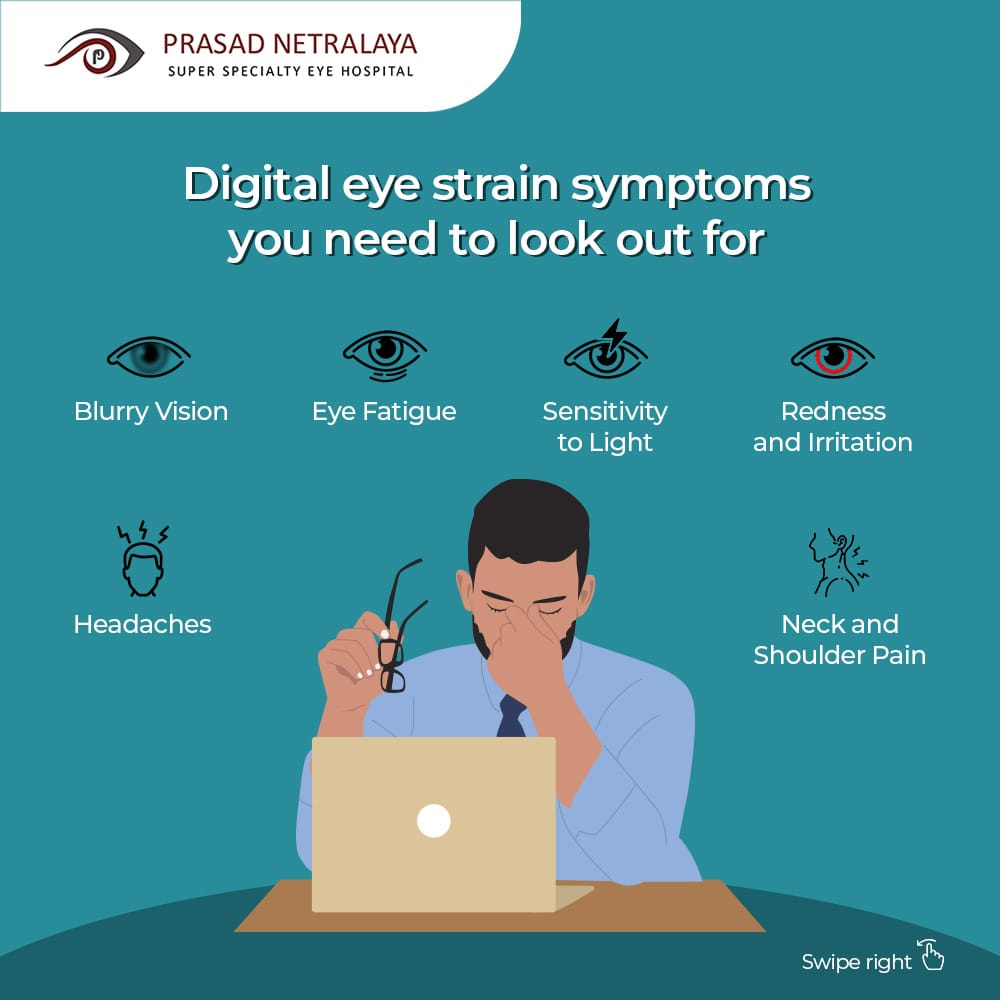
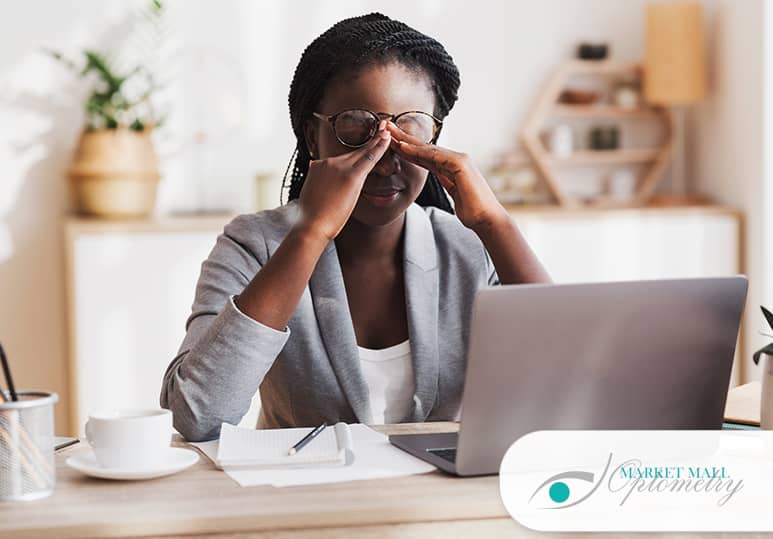
Visual overstimulation may show up as eye fatigue, increased visual snow, headaches, or difficulty focusing. Emotional irritability and mental exhaustion can tag along too.
Learning to recognize these early signs lets you adjust before symptoms escalate. Think of it as your body’s gentle request for a breather.
Reducing Screen-Related Strain
The encouraging news: small changes can significantly improve your comfort. You do not need a digital detox — just a few thoughtful tweaks.
Display Adjustments
Lowering brightness, reducing contrast, and increasing text size all decrease visual effort. Warm color settings and blue-light filters often feel gentler on sensitive eyes. Try night mode during the day too — many people find it soothing.
Structured Screen Breaks
Regular breaks give your visual system a chance to rest. Try looking away from screens and resting your gaze on something distant and neutral — the classic 20-20-20 rule (every 20 minutes, look at something 20 feet away for 20 seconds) is a great starting point.
Content Choices
Choosing static content over fast-moving visuals reduces sensory load. Limiting rapid scrolling, autoplay videos, and multitasking across tabs can also help your eyes — and your mind — feel calmer.
Creating a Supportive Digital Routine
Mindful technology use supports your nervous system’s balance. It is not about restriction; it is about intention.
Try scheduling screen-heavy tasks earlier in the day, setting gentle boundaries around evening use, and alternating digital work with non-screen activities. Your eyes — and your sleep — will thank you.
Long-Term Adaptation
Here is something hopeful: over time, many people notice their tolerance for screens improves as the nervous system calms. Gradual exposure paired with good self-care often leads to greater comfort.
Progress may be subtle, but consistent adjustments build real resilience. Celebrate the small wins.
Frequently Asked Questions
Should screens be avoided completely?
Complete avoidance is not usually necessary — and it is not very practical either. Balanced, mindful use is far more sustainable.
Do blue-light filters help?
Many people find them helpful, though responses vary. They are easy to try, so see how your eyes feel.
Can screen use cause flare-ups?
Yes — overstimulation can temporarily intensify symptoms. The key word is temporarily; symptoms usually settle with rest.
Will tolerance improve over time?
Often, yes. Tolerance tends to improve as your emotional and neurological stability increase.
Key Takeaways
Screen use and digital overstimulation can influence symptom intensity in hallucinogen persisting perception disorder — but you have more control than you might think. By adjusting display settings, pacing your screen time, and practicing mindful technology habits, you can reduce visual strain and support your long-term recovery. Remember: balance, not avoidance, is the goal. A gentle note: this article is for education and support, not medical advice. If visual symptoms are significantly affecting your life, a qualified professional can help.
