



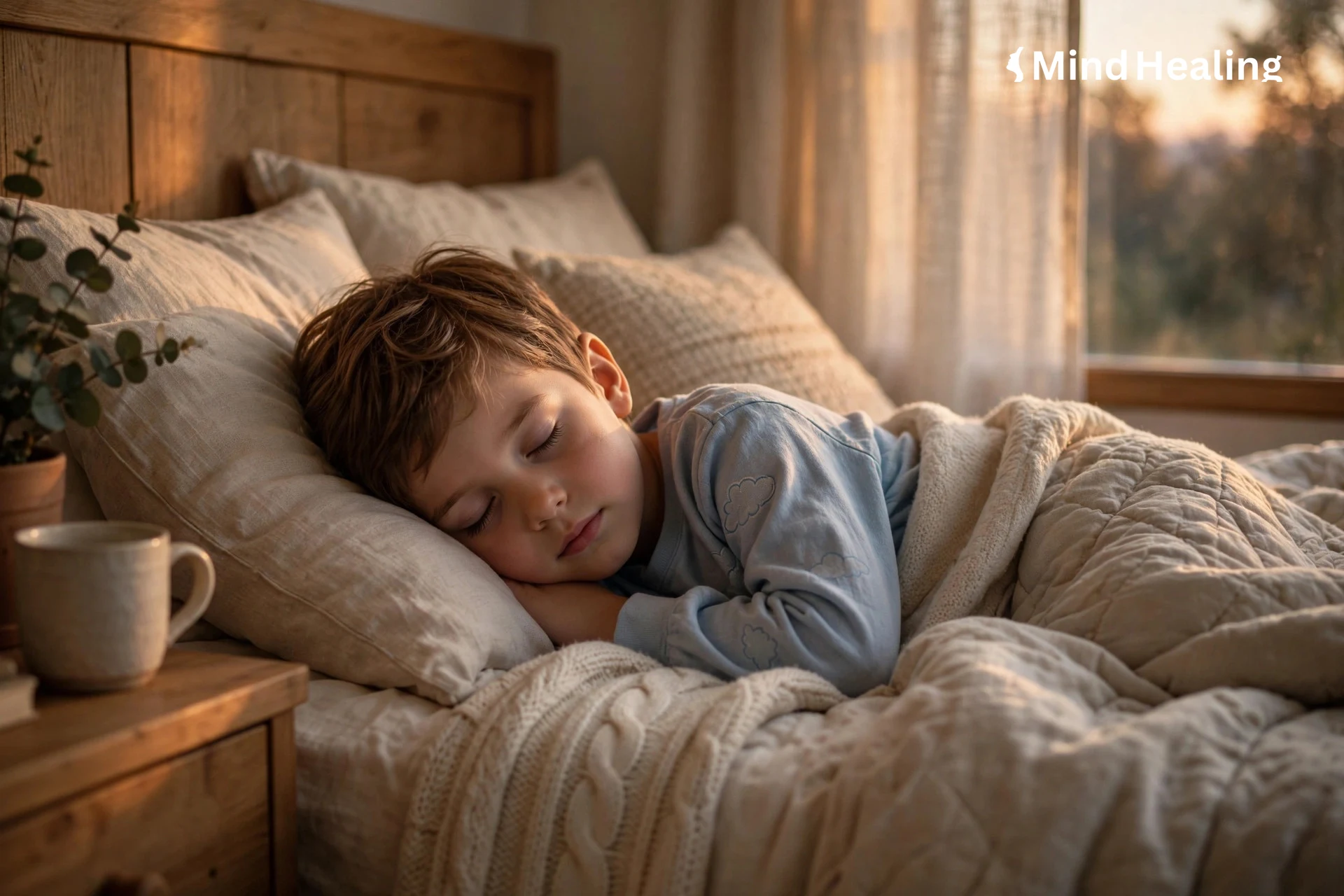
“How much sleep do kids need?” is one of the most common questions parents ask — and one of the hardest to answer from a tired brain at 2 a.m. The short answer: more than most of them get. Sleep shapes everything in childhood: growth, learning, mood, immunity, and behavior. A child who seems “hyper” or cranky in the evening is often simply overtired. This guide gives you clear, age-by-age sleep needs, plus practical ways to make bedtime actually work.
Key Points
- Sleep needs drop as children grow: newborns need 14–17 hours; teens need 8–10 hours.
- Most sleep problems in children come from inconsistent routines and screens before bed, not medical issues.
- A calming 20–30 minute bedtime routine works better than any sleep gadget.
- Overtired children often look hyperactive, not sleepy — bedtime battles are frequently a sign bedtime is too late.
- Good sleep in childhood is linked to better learning, mood, immunity, and growth.
Why Sleep Matters So Much
During sleep, a child’s brain consolidates learning, growth hormone is released, and the immune system recharges. Children who regularly miss sleep are more likely to struggle with attention, emotional outbursts, and frequent illness. If your child melts down every evening, has trouble concentrating at school, or catches every cold going around, sleep is the first place to look — before behavior charts or extra tuition.
Sleep Needs by Age
These ranges follow guidance from pediatric sleep authorities (including the American Academy of Pediatrics and the National Sleep Foundation). Every child is a little different — the key question is whether your child wakes up rested and functions well during the day.
Newborns (0–3 months): 14–17 hours
Sleep comes in short bursts around the clock. There is no real day-night pattern yet, and that is normal. Focus on safe sleep (baby on their back, clear crib) and rest whenever you can — newborn care is mostly about surviving this phase with support.
Infants (4–12 months): 12–16 hours
Includes 2–3 naps gradually dropping to 2. By around 6 months, many babies can sleep longer stretches at night. Consistent bedtime routines start paying off here.
Toddlers (1–2 years): 11–14 hours
Usually one afternoon nap plus a full night. This is prime bedtime-battle age — toddlers test boundaries at night just like they do during the day. Keep the routine boring and predictable.
Preschoolers (3–5 years): 10–13 hours
Naps fade between ages 3 and 5. Nighttime fears and stall tactics (“one more story!”) peak here. A nightlight and a consistent routine help more than giving in to the tenth glass of water.
School-age (6–12 years): 9–12 hours
Homework, activities, and screens start eating into sleep. Most school-age kids need 10+ hours but get far less. Protecting bedtime matters more than ever for learning and mood.
Teenagers (13–17 years): 8–10 hours
Biology shifts teen sleep clocks later — they genuinely are not sleepy at 10 p.m. But early school starts clash with this. Teens who are chronically short on sleep show more irritability, risk-taking, and low mood. If your teen struggles here, our parenting teenagers guide covers the bigger picture of these years.
Building a Bedtime Routine That Works
The 30-minute wind-down
Start 30 minutes before lights-out: bath or wash-up, pajamas, brush teeth, then one calm activity — a story, quiet talk about the day, or gentle stretching. The routine is a signal to the brain: sleep is coming. Bonding at bedtime through stories and closeness also deepens your connection.
Screens off, room cool and dark
Screens should go off at least 30–60 minutes before bed — the light and stimulation delay sleep. Keep the room cool, dark, and quiet. A consistent wake-up time (even on weekends, within an hour) anchors the whole sleep cycle.
Be boring at bedtime
Middle-of-the-night parenting should be as dull as possible: dim lights, minimal talking, no play. Excitement teaches the brain that night waking is fun. Boredom teaches it to go back to sleep.
Common Sleep Problems and Fixes
Night wakings
Brief wakings are normal — everyone wakes between sleep cycles. The issue is whether your child can fall back asleep independently. Gradually reduce the help they need (less rocking, sitting nearby instead of holding) so they learn to self-settle.
Nightmares and night terrors
Nightmares (bad dreams the child remembers) need comfort and reassurance. Night terrors (screaming, thrashing, but the child is actually asleep and won’t remember) need only safety — don’t try to wake them; just keep them from hurting themselves. Both are common and usually fade with age.
“I’m not tired” (but clearly is)
An overtired child’s stress hormones rise, making them wired and cranky — which looks like “not tired.” The fix is counterintuitive: move bedtime earlier, not later. Most bedtime battles improve within a week of an earlier bedtime.
Sleep in Pakistani and South Asian Homes
Co-sleeping and shared family beds are the norm in much of Pakistan, and that is fine — family sleep arrangements are a cultural choice, and many children sleep well this way. If it works for everyone, keep it; if nobody is sleeping, it is okay to transition gradually. Practical local notes: during load-shedding, a battery fan and mosquito net protect sleep more than anything fancy; keep evening tuition and homework from pushing bedtime past 9–10 p.m. for young children; and during Ramadan, expect schedules to shift — protect a daytime nap for young kids rather than fighting the altered rhythm.
Frequently Asked Questions
My child fights bedtime every night. What am I doing wrong?
Probably nothing — bedtime resistance is one of the most common parenting struggles. Check the three usual suspects: bedtime is too late (move it earlier), the routine is inconsistent, or screens are on too close to bed. Fix those before assuming a deeper problem.
Is co-sleeping bad for my child?
No. Millions of families worldwide share sleep safely, and it is the cultural norm across South Asia. What matters is that everyone actually sleeps well. If co-sleeping means constant waking for parent or child, a gradual transition to their own bed is reasonable.
How do I drop the daytime nap?
Signs your child is ready: they take forever to fall asleep at nap time, bedtime becomes a battle, or they sleep fine at night without the nap. Drop it gradually — try quiet time instead of sleep — and move bedtime 30–60 minutes earlier during the transition.
My teenager won’t sleep before midnight. Should I force it?
Forcing rarely works with teens. Instead, negotiate: agree on a “screens off” time, keep mornings consistent (light exposure helps reset their clock), and discuss why sleep matters for their goals — sports, studies, mood. Pick your battles; the non-negotiable is school-day wake time.
When should I talk to a doctor about sleep?
See your pediatrician if your child snores loudly or gasps (possible sleep apnea), sleepwalks frequently into unsafe situations, is excessively sleepy during the day despite enough hours, or if sleep problems persist for weeks despite consistent routines.
Key Takeaways
- Match sleep to age: 14–17 hours for newborns down to 8–10 for teens.
- A consistent 30-minute wind-down routine beats any sleep product.
- Screens off 30–60 minutes before bed; keep wake times steady.
- Overtired looks hyper — when in doubt, move bedtime earlier.
- Co-sleeping is a valid cultural choice; what matters is that everyone rests.
- Find more family wellness topics in our Parenting section.

2 Comments
Pingback: Homework Without Fights: A Parent's Guide
Pingback: Newborn Care Basics: A First-Time Parent's Guide