



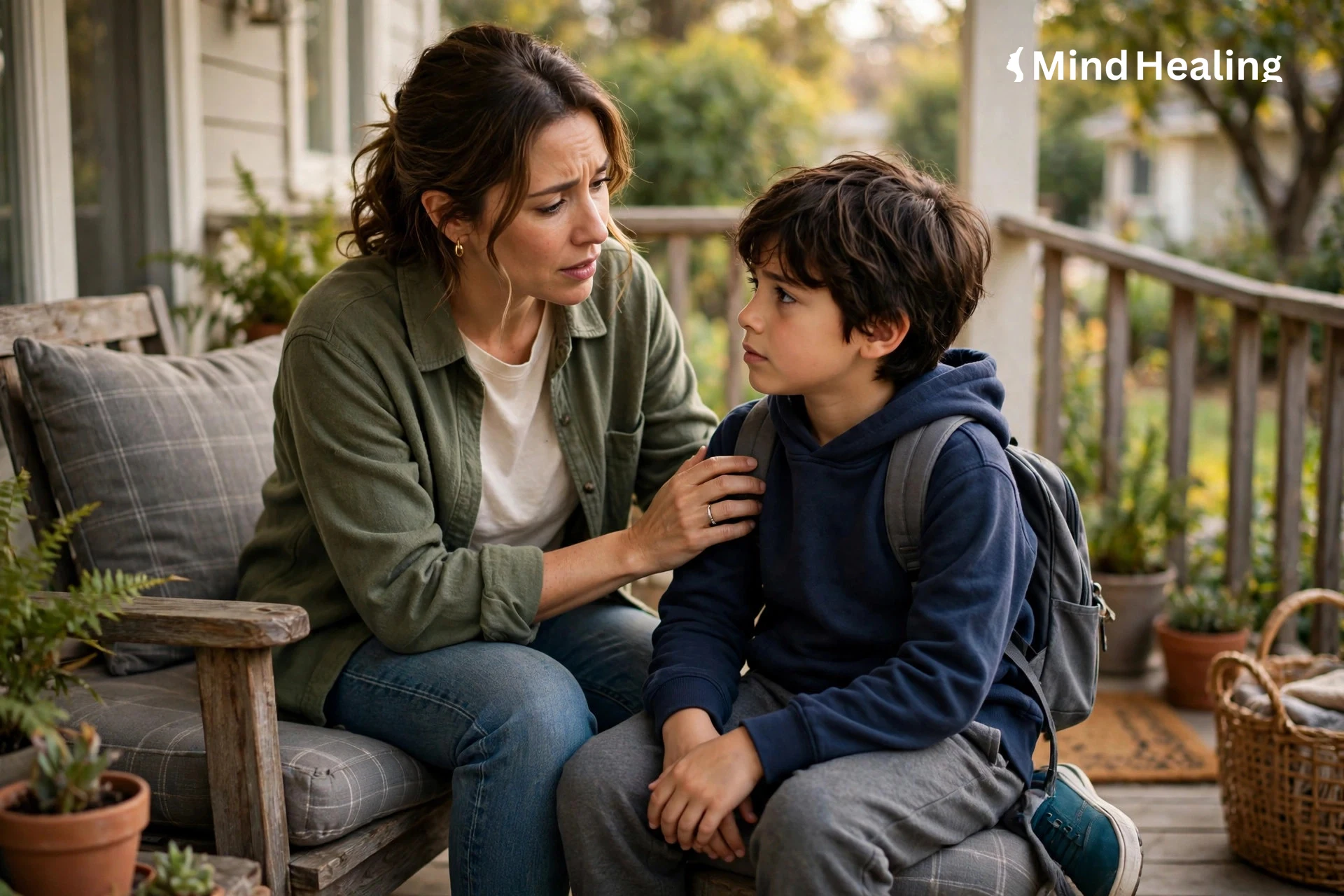
Your child used to love school. Now mornings bring stomachaches, the bus stop brings dread, and your once-chatty kid has gone quiet. When a child is being bullied, they rarely announce it — shame, fear of retaliation, and worry about parents overreacting keep them silent. That is why parents need to know the signs of bullying, how to open the conversation, and what actually helps — because the right response can change everything.
Key Points
- Most bullied children do not tell — watch for behavioral changes: school avoidance, lost belongings, sleep problems, sudden mood shifts.
- Bullying is repeated, intentional harm with a power imbalance — it is different from ordinary peer conflict.
- Your first job is to listen, believe, and stay calm; an overreacting parent is the top reason kids stay silent.
- Work with the school systematically: document, meet, follow up in writing — schools act on records.
- Do not tell your child to “just ignore it” or “fight back” — teach assertiveness, buddy strategies, and safe reporting instead.
- Bullying can leave lasting emotional marks; watch for anxiety and depression — see teen anxiety and depression warning signs.
What Counts as Bullying
Not every playground clash is bullying. Experts define bullying by three features: it is repeated (not a one-time fight), intentional (meant to hurt, humiliate, or control), and involves a power imbalance (physical, social, or numerical). A single argument between equals is conflict; weeks of one child being targeted by a stronger peer or group is bullying — and it needs adult intervention.
The forms it takes
Physical bullying (hitting, pushing, damaging belongings), verbal bullying (name-calling, threats, mocking), social bullying (exclusion, rumor-spreading, public humiliation), and cyberbullying (harassment via phones and social media — which follows the child home and never switches off). In Pakistan, bullying also takes local forms: mocking a child’s accent or background, economic shaming, and ragging-style hazing of younger students by seniors.
Signs Your Child May Be Being Bullied
Trust behavior over words. A child who says “everything’s fine” while showing several of these signs is asking for help without words.
School-related signs
Sudden reluctance to go to school — morning stomachaches, headaches, or tears that vanish on weekends. Dropping grades, lost interest in schoolwork, or wanting to change schools, routes, or bus stops. Coming home with damaged or missing belongings, unexplained bruises or scratches.
Emotional and behavioral signs
Withdrawal from family and friends, loss of appetite or changes in sleep, nightmares, sudden mood swings, tearfulness, or anger outbursts. A previously confident child becoming anxious or clingy. Regression in younger children — bedwetting, thumb-sucking, baby talk.
Social signs
Fewer friends coming over, no longer invited to things they used to be included in, eating lunch alone, spending break times near teachers. Online: distress after using the phone, secrecy about messages, deleting apps suddenly.
What NOT to conclude too fast
These signs can also indicate anxiety, depression, learning difficulties, or problems at home. Do not interrogate — observe, and open a gentle conversation. If several signs cluster, take bullying seriously as a hypothesis, not a verdict.
How to Talk to Your Child About It
The conversation matters more than the solution. Children who feel heard tell more; children who feel managed shut down. Our guide on how to talk so kids listen covers these skills in depth — here is the bullying-specific version.
Choose calm and privacy
A quiet moment — a walk, a drive, doing dishes together — not a formal sit-down that feels like an interrogation. Start with observation, not accusation: “I’ve noticed you seem unhappy about school lately. I’m here if something’s going on.”
Listen, believe, stay calm
If they tell you, your reaction in the first thirty seconds determines everything. Stay steady — even if you are furious inside. Believe them: false reports of bullying are rare, and doubting your child teaches them not to tell you things. Thank them for telling you: “That took courage. I’m glad you told me.”
Ask, don’t assume
“What happens? Who is involved? When did it start? Have you told anyone?” Let them narrate. Ask what they have tried and what they are afraid will happen if adults intervene — fear of retaliation or of being labeled a snitch is the biggest barrier, and you need to address it directly.
Reassure: it is not their fault
Bullied children almost always blame themselves. Say it plainly and repeatedly: “This is not your fault. No one deserves this. We will handle it together.” Then involve them in the plan — children cooperate with solutions they helped choose.
What Parents Can Do: A Step-by-Step Response
Step 1: Document everything
Write down dates, incidents, witnesses, and any evidence (messages, photos of injuries or damaged items). Documentation turns a vague complaint into a case the school must address.
Step 2: Teach immediate safety strategies
While the bigger response unfolds, give your child tools: stay near groups (bullies target isolated kids), use confident body language and a firm “stop,” walk away toward adults, and tell a trusted teacher. Role-play these at home — practice makes them usable under stress. Do NOT advise fighting back physically; it escalates danger and can get your child punished.
Step 3: Contact the school — in writing
Request a meeting with the class teacher and school counselor or principal. Bring your documentation. Ask specifically: what is the school’s anti-bullying policy, what steps will be taken, who is responsible, and when will you get an update? Follow up every conversation with an email summarizing what was agreed. Written records create accountability.
Step 4: Follow up and escalate if needed
Give the school a reasonable window (one to two weeks), then check: has the behavior stopped? If not, escalate — to the principal, then to school management or the education board. In Pakistan, private schools respond to sustained parental pressure; document everything and consider a written complaint to the school’s board if the administration stalls.
Step 5: Support your child’s recovery
Stopping the bullying is half the job; healing is the other half. Keep routines stable, create space for feelings without forcing talk, and rebuild confidence through activities where your child succeeds and belongs — sports, arts, scouts, anything with a healthy peer group. Watch for lingering anxiety or depression in the months after; our warning signs guide can help you spot them early.
What NOT to Do
Don’t confront the bully or their parents yourself
It feels satisfying and almost always backfires — escalating conflict and putting your child at greater risk. Work through the school.
Don’t tell them to “just ignore it”
Ignoring does not stop bullying; research shows it rarely works and can signal to the bully that the target will not resist. It also teaches your child their pain does not merit action.
Don’t minimize or blame
“Toughen up,” “maybe if you were friendlier” — these wound twice. Even if your child contributed to a conflict, bullying’s power imbalance makes it the adults’ problem to solve.
Don’t pull them out of school impulsively
Changing schools without addressing the pattern can follow the child — and teaches avoidance. Consider it only if the school fails repeatedly and your child’s safety or mental health is at serious risk.
Building Long-Term Resilience
You cannot bully-proof a child, but you can raise one who recovers faster and seeks help sooner.
Confidence and friendships
One good friend is the strongest known protection against bullying’s worst effects. Nurture your child’s friendships actively — playdates, shared activities, social skills coaching where needed. A child who knows they are valued somewhere is harder to break anywhere.
Assertiveness, not aggression
Teach the middle path: calm, clear, firm. “Stop. I don’t like that.” Eye contact, steady voice, then walk away. Practice until it feels natural — assertiveness is a skill, not a personality trait.
Digital resilience
For cyberbullying: save evidence (screenshots), block and report accounts, keep devices out of bedrooms at night, and know that you can involve the school even for off-campus online behavior that affects school life. In Pakistan, the FIA’s cybercrime reporting exists for serious cases — a fact worth knowing, though school and family action comes first.
A Note for Parents in Pakistan and South Asia
Bullying here is under-discussed and often dismissed — “bachay to lartay hain” (kids fight, it’s normal). Teachers may minimize it, and some schools lack any real anti-bullying policy. That makes parental advocacy more important, not less. When meeting school administration, be firm, documented, and persistent — polite but unmovable. Bring the other parent if possible; two voices carry further.
Cultural note: children here may hide bullying from parents out of “sharam” (shame) or fear of being blamed — especially around social or cyberbullying with gendered dimensions. Make it explicit and repeat it: “You will never be in trouble for telling me someone is hurting you.” For broader support on your parenting journey, explore our parenting hub.
Frequently Asked Questions
How do I know it’s bullying and not normal conflict?
Look for the three markers: repeated, intentional, and a power imbalance. Mutual arguments between equals are conflict; one-sided targeting over time is bullying and needs adult intervention.
My child begged me not to tell the school. What should I do?
Take the fear seriously — discuss what they are afraid of and plan safety measures together. But do not promise total secrecy: explain that adults need to be involved to make it stop, and that you will act in ways that protect them. Most children feel relief once the school handles it well.
Should I contact the bully’s parents directly?
Generally no. It often escalates and rarely helps. Go through the school, which has the authority and the full picture. Direct contact is a last resort, best done with school mediation.
What if the school does nothing?
Escalate in writing: principal, school board/owners, and document every step. Set a deadline. If your child’s safety or mental health is seriously at risk and the school fails, consider changing schools — and consider whether the environment is right for your child at all.
Can bullying cause long-term damage?
It can — persistent bullying is linked to anxiety, depression, and low self-esteem that can last into adulthood. But early intervention and strong family support dramatically reduce the risk. Recovery is the norm when children are believed and protected.
What about cyberbullying — is it “real” bullying?
Absolutely — and often worse, because it follows the child home, spreads fast, and feels inescapable. Take it as seriously as physical bullying: save evidence, block, report, and involve the school.
Key Takeaways
- Bullying = repeated, intentional harm with a power imbalance. Learn to distinguish it from ordinary conflict.
- Watch for behavioral changes — most bullied children do not tell on their own.
- When they tell: listen, believe, stay calm, thank them. Your reaction shapes everything.
- Respond systematically: document, teach safety strategies, contact the school in writing, follow up.
- Never advise “ignore it” or “fight back” — teach assertiveness and safe reporting instead.
- Support recovery: stable routines, confidence-building activities, and watch for anxiety or depression after.

1 Comment
Pingback: Back-to-School Anxiety: Helping Your Child Adjust