

Do you often feel overwhelmed by work, family, or everyday responsibilities?
Has stress started affecting your sleep, mood, or ability to concentrate?
Are you wondering whether your stress levels are higher than they should be?
Take this free Stress Test to discover how stress may be affecting your emotional and physical well-being. This self-assessment can help you identify common signs of stress and understand whether it may be time to make positive changes.
What Is Stress?
Stress is your body’s natural response to challenges, pressure, or demanding situations. Everyone experiences stress from time to time, whether it comes from work, school, finances, relationships, or unexpected life events. In small amounts, stress can help you stay focused and motivated. However, when it becomes frequent or overwhelming, it can begin to affect your health and quality of life.
Long-term stress may influence your emotions, thoughts, physical health, and daily performance. As a result, you may feel anxious, irritable, exhausted, or unable to relax. Moreover, ongoing stress can reduce productivity, affect relationships, and make it harder to cope with everyday responsibilities.
Although stressful situations cannot always be avoided, learning to recognize your stress levels is an important first step toward improving your well-being. Therefore, understanding how stress affects you can help you develop healthier coping strategies before it becomes more difficult to manage.
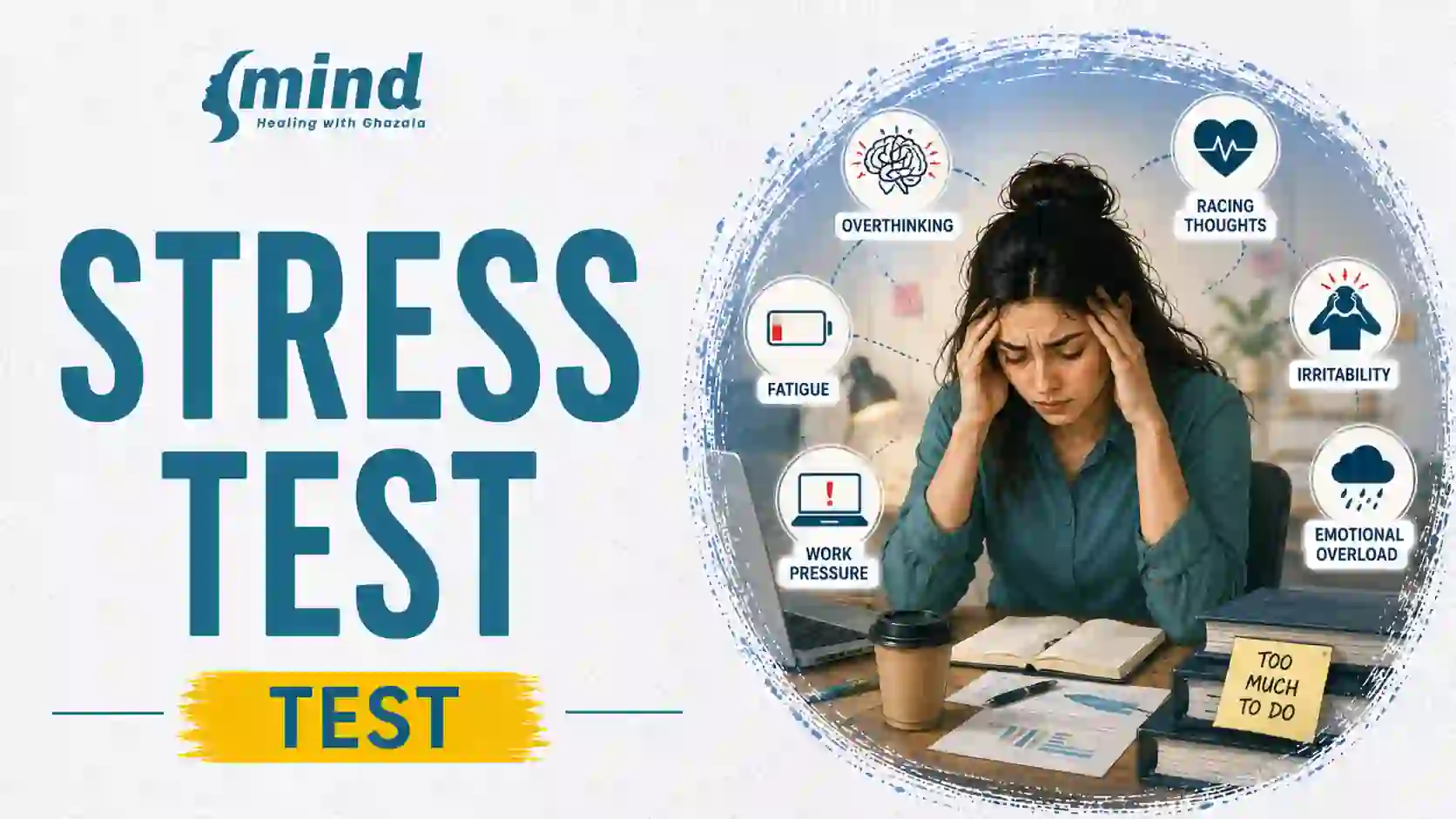
People experiencing high levels of stress may notice these signs:
- Feeling overwhelmed by daily responsibilities.
- Finding it difficult to relax or switch off.
- Becoming easily frustrated or irritable.
- Having trouble concentrating or making decisions.
- Feeling mentally or physically exhausted.
- Experiencing changes in sleep or appetite.
- Worrying excessively about everyday situations.
- Losing interest in activities you usually enjoy.
Now onto the Stress assessment.
Instructions For Taking Stress Test
Below is a list of statements related to your thoughts, emotions, physical reactions, and daily experiences.
Please read each statement carefully and choose the response that best reflects how you have been feeling during the past few weeks.
Please note: This Stress Test is a self-assessment tool. It is not a diagnostic test and should not replace advice from a qualified healthcare or mental health professional.
Please note: This is a self-assessment and not a diagnostic test
Results
Your time:
Frequently Asked Questions (FAQs)
1. What are the common signs of stress?
Common signs include feeling overwhelmed, irritability, difficulty concentrating, headaches, muscle tension, fatigue, sleep problems, and changes in appetite. However, symptoms can vary from one person to another.
2. Can stress affect physical health?
Yes. Chronic stress can affect both physical and mental health. For example, it may contribute to headaches, digestive problems, high blood pressure, sleep disturbances, weakened immunity, and emotional exhaustion.
3. How can I reduce my stress levels?
You can manage stress by exercising regularly, getting enough sleep, practicing relaxation techniques, maintaining a healthy routine, talking with supportive people, and setting realistic goals. If stress becomes overwhelming or persistent, consider seeking help from a qualified mental health professional.