



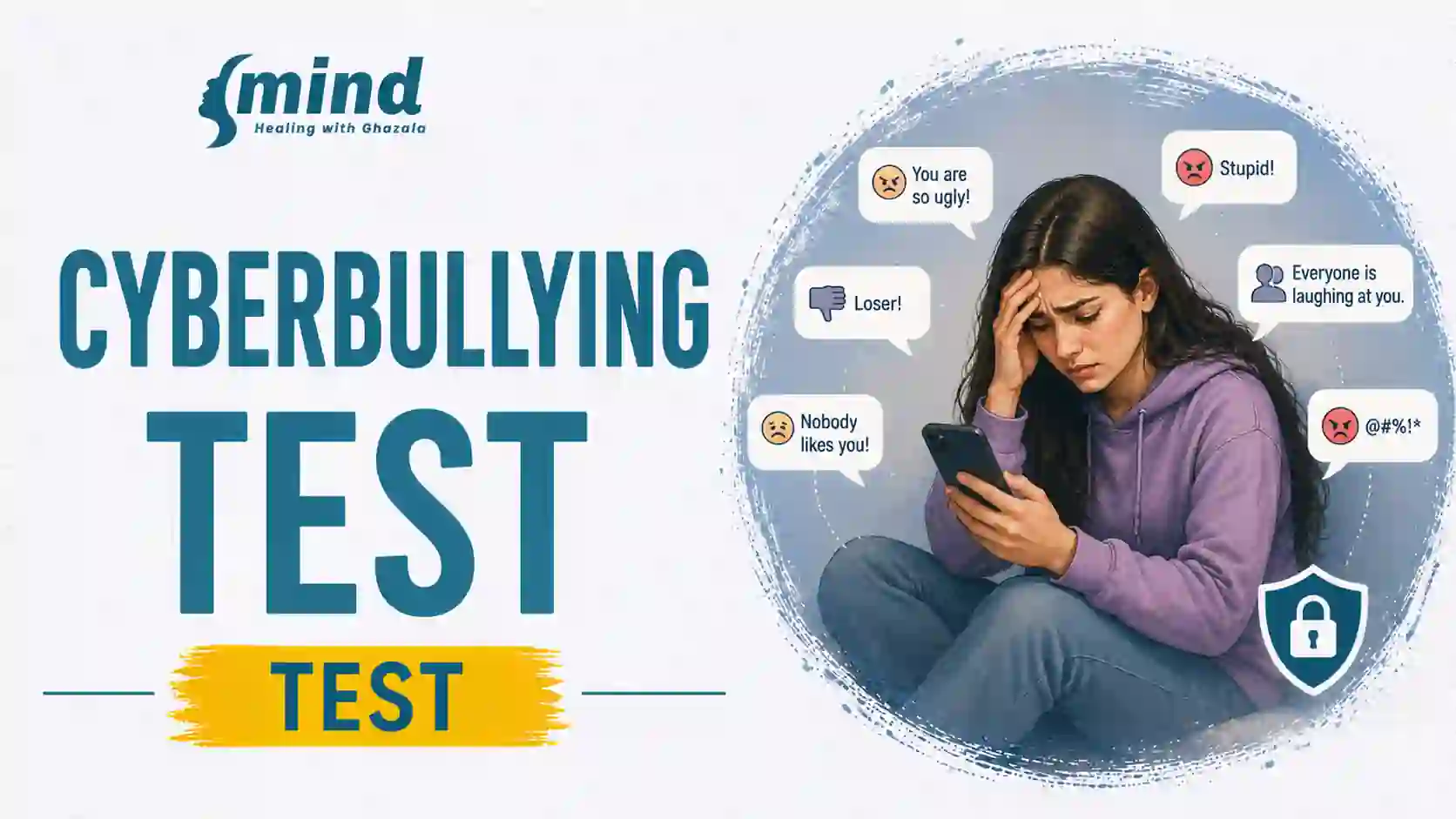
Have you received hurtful messages or been targeted online?
Do negative comments, rumors, or social media posts leave you feeling anxious or upset?
Are you wondering whether your online experiences could be considered cyberbullying?
Take this free Cyberbullying Test to understand whether you may be experiencing cyberbullying or engaging in behaviors that could harm others online. This self-assessment can help you recognize unhealthy digital interactions and encourage safer online habits.
What Is Cyberbullying?
Cyberbullying is the repeated use of digital technology to harass, threaten, embarrass, intimidate, or harm another person. It can happen through social media, text messages, online games, email, discussion forums, or messaging apps. Unlike face-to-face bullying, cyberbullying can occur at any time and may spread quickly to a large audience.
Cyberbullying affects people of all ages, although children, teenagers, and young adults experience it most frequently. Common examples include sending abusive messages, sharing embarrassing photos without permission, spreading false rumors, creating fake profiles, excluding someone from online groups, or repeatedly posting hurtful comments.
The emotional effects of cyberbullying can be serious. Consequently, some people experience anxiety, sadness, stress, low self-esteem, or fear of using digital platforms. Therefore, recognizing the warning signs early can help you seek support and protect your mental well-being.
People affected by cyberbullying may experience these signs:
- Feeling anxious before using social media or messaging apps.
- Avoiding online activities because of fear or embarrassment.
- Receiving repeated insulting or threatening messages.
- Feeling emotionally distressed after reading online comments.
- Becoming withdrawn from friends or family.
- Experiencing a decline in confidence or self-esteem.
- Constantly worrying about what others are posting online.
- Feeling helpless or overwhelmed by online harassment.
Now onto the Cyberbullying assessment.
Instructions For Taking Cyberbullying Test
Below is a list of statements related to your online experiences, digital interactions, and emotional responses.
Please read each statement carefully and choose the response that best reflects your recent experiences.
Please note: This Cyberbullying Test is a self-assessment tool. It is not a diagnostic test. If you feel unsafe or are experiencing serious online harassment, seek support from a trusted adult, school official, workplace representative, or qualified mental health professional.
Please note: This is a self-assessment and not a diagnostic test
Results
Your time:
Frequently Asked Questions (FAQs)
1. What is considered cyberbullying?
Cyberbullying includes repeated online behaviors that intentionally hurt, threaten, embarrass, or harass another person. Examples include abusive messages, spreading rumors, sharing private content without permission, impersonation, and online intimidation.
2. What should I do if I am being cyberbullied?
If you are experiencing cyberbullying, avoid responding emotionally. Instead, save evidence, block the person, report the behavior to the platform, and seek support from someone you trust. If the harassment becomes threatening or severe, contact the appropriate authorities.
3. Can cyberbullying affect mental health?
Yes. Cyberbullying can increase stress, anxiety, depression, loneliness, low self-esteem, and emotional distress. Therefore, seeking support early can help reduce its impact and improve emotional well-being.
