



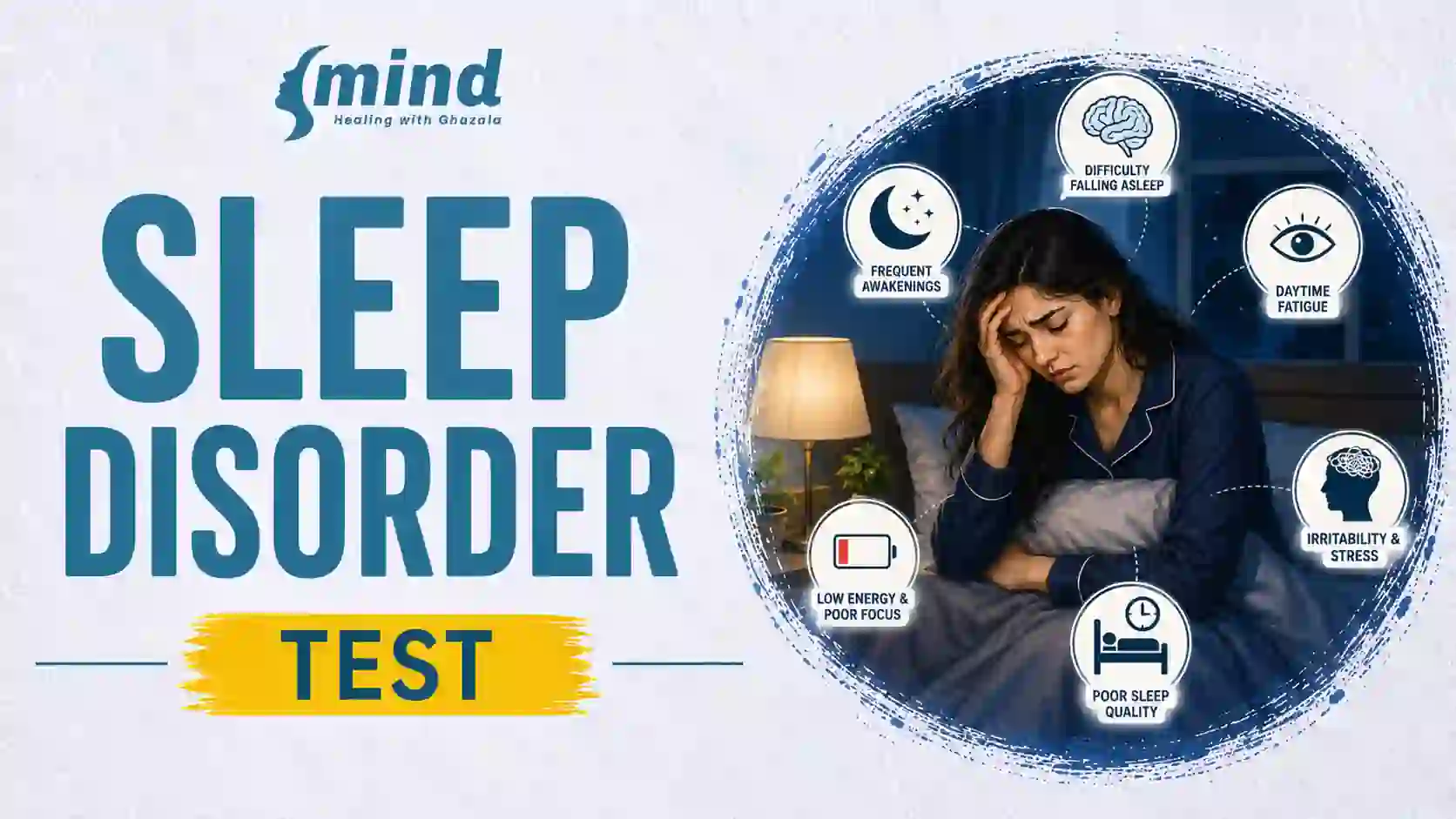
Do you struggle to fall asleep or stay asleep during the night?
Do you wake up feeling tired, even after spending enough time in bed?
Are sleep problems affecting your mood, energy, or daily performance?
Take this free Sleep Disorder Test to understand whether your sleep patterns may indicate signs of a sleep disorder. This self-assessment can help you identify common sleep-related concerns and determine whether you should consider seeking professional advice.
What Is a Sleep Disorder?
A sleep disorder is a condition that regularly affects the quality, timing, or amount of sleep you get. Although everyone experiences occasional restless nights, ongoing sleep problems can interfere with your physical health, emotional well-being, and everyday functioning.
There are many different types of sleep disorders, including insomnia, sleep apnea, restless legs syndrome, circadian rhythm sleep disorders, and excessive daytime sleepiness. Consequently, people may experience different symptoms depending on the underlying cause. Some individuals struggle to fall asleep, while others wake up repeatedly during the night or feel exhausted despite sleeping for several hours.
Healthy sleep is essential for memory, concentration, mood regulation, immune function, and overall well-being. Therefore, recognizing persistent sleep problems early may help you improve your sleep habits and receive appropriate treatment if necessary.
People experiencing a sleep disorder may notice these signs:
- Difficulty falling asleep at bedtime.
- Waking up several times during the night.
- Feeling tired after a full night’s sleep.
- Excessive sleepiness during the day.
- Loud snoring or pauses in breathing while sleeping.
- Difficulty concentrating because of poor sleep.
- Feeling irritable or emotionally drained.
- Depending on caffeine to stay awake throughout the day.
Now onto the Sleep Disorder assessment.
Instructions For Taking Sleep Disorder Test
Below is a list of statements related to your sleeping habits, nighttime experiences, and daytime functioning.
Please read each statement carefully and choose the response that best reflects your sleep patterns over the past few weeks.
Please note: This Sleep Disorder Test is a self-assessment tool. It is not a diagnostic test and should not replace an evaluation by a qualified healthcare provider or sleep specialist.
Please note: This is a self-assessment and not a diagnostic test
Results
Your time:
Frequently Asked Questions (FAQs)
1. What are the most common sleep disorders?
The most common sleep disorders include insomnia, sleep apnea, restless legs syndrome, narcolepsy, and circadian rhythm sleep disorders. Each condition affects sleep in different ways and may require different treatments.
2. How do I know if I have a sleep disorder?
Frequent difficulty sleeping, excessive daytime fatigue, loud snoring, waking up gasping for air, or ongoing poor-quality sleep may suggest a sleep disorder. However, only a healthcare professional can make a diagnosis.
3. How can I improve my sleep quality?
You can improve sleep by maintaining a regular sleep schedule, limiting caffeine before bedtime, reducing screen time at night, creating a comfortable sleep environment, and managing stress. If sleep problems continue for several weeks, consult a healthcare professional for further evaluation.
